Why do coffee brands use side gusset bags?
1. They hold more without becoming too wide
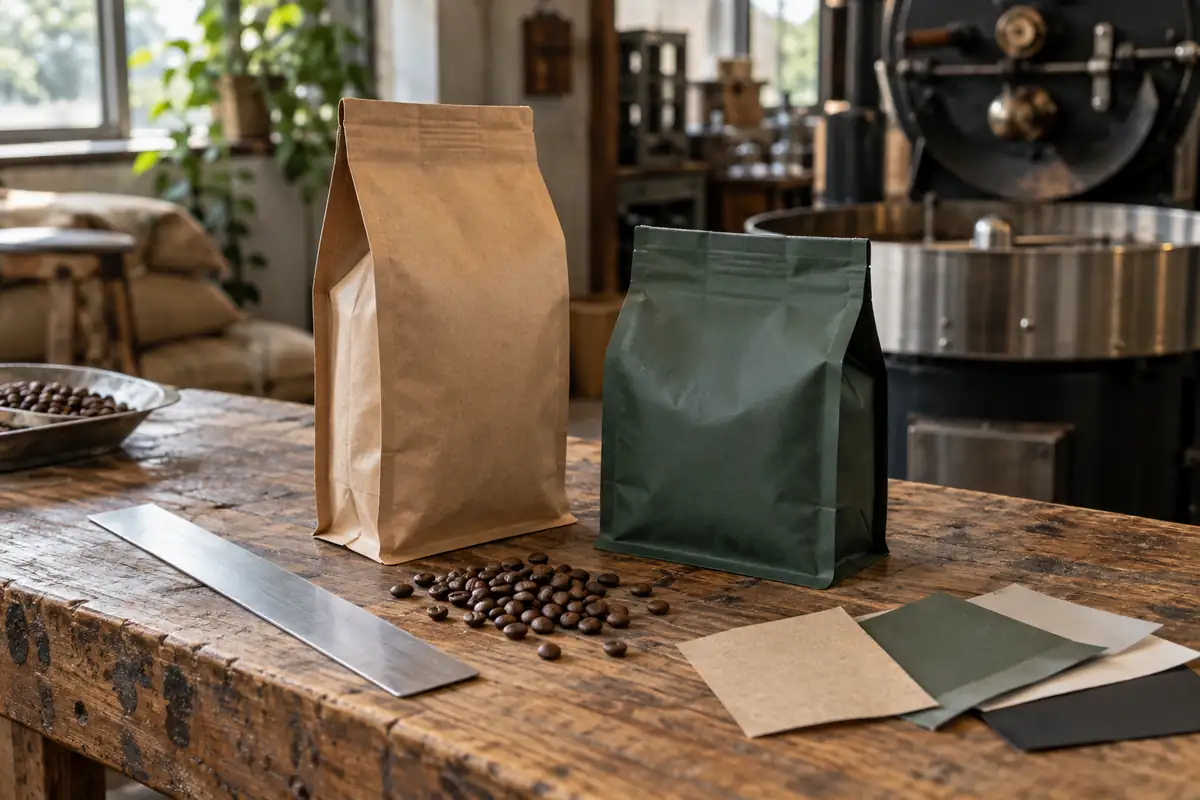
Whole coffee beans take up a fair amount of space. When the side folds open, the bag gains usable volume while keeping a compact front panel.
This makes the format suitable for both retail coffee and larger packs. Empty bags also lie relatively flat, which helps with storage before filling.
The stated weight alone is not enough to select a size. A 500 g bag of whole beans may need different dimensions from a 500 g bag of ground coffee. Roast level, bean size and the amount of space left for sealing also matter.
Our side gusset bag size guide explains how to work out the dimensions before sampling.
2.The shape is easy to use for coffee branding
Customers already recognize the tall side gusset format as coffee packaging. It gives the front artwork a clear focal point and leaves the side panels available for secondary information.
The finished shape depends on how much coffee is filled into the bag. Material stiffness and the bottom construction also change how the bag looks on the shelf. A filled sample is more useful than judging the design from a flat dieline alone.
3.It works with different material structures
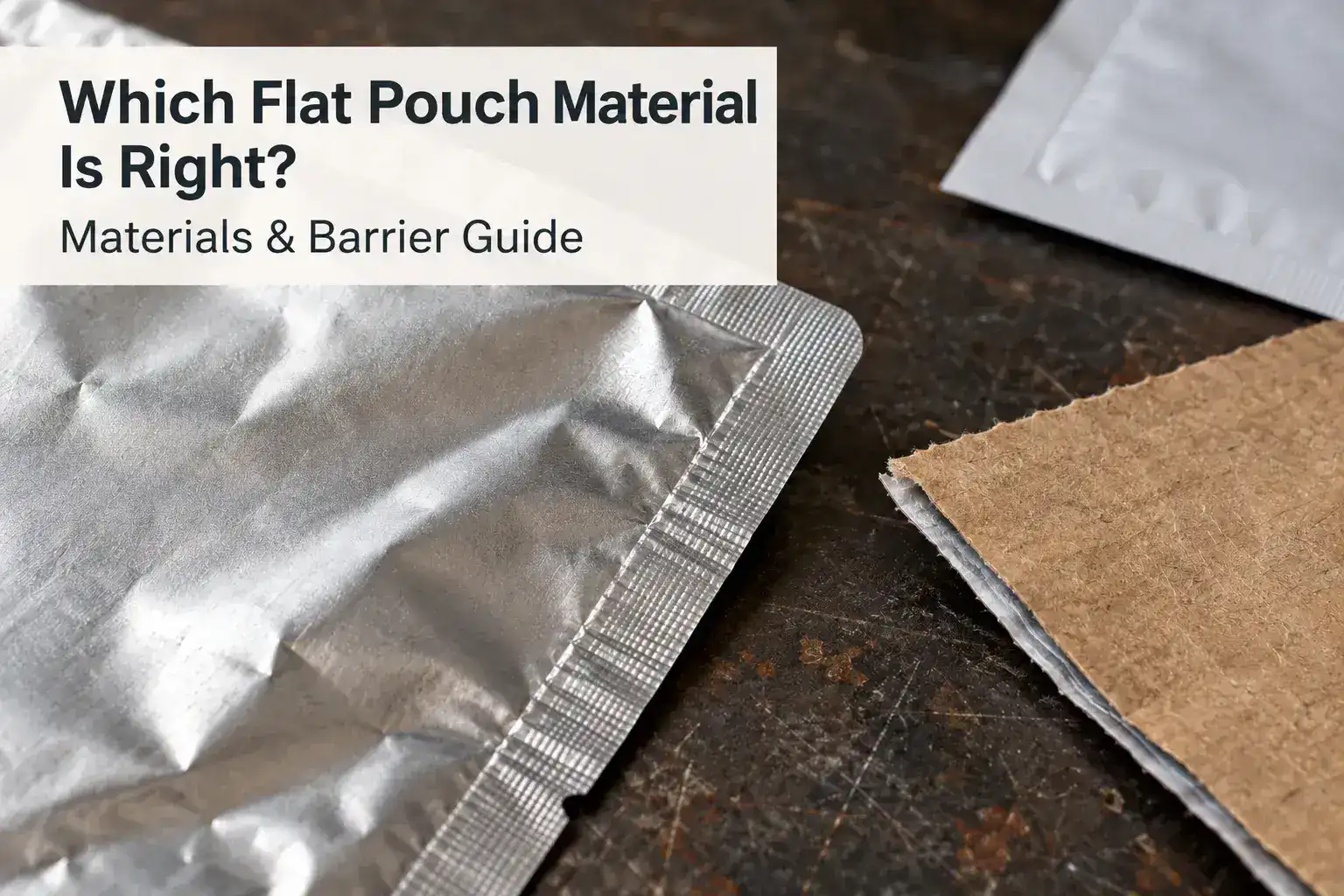
The same bag shape can be made with several laminates. A basic plastic structure may suit a short distribution cycle, while metallized film or aluminum foil may be considered when stronger light, oxygen and moisture protection is needed.
Kraft paper can create a natural look, but the inner layers still determine the barrier and sealing performance. A kraft appearance does not automatically mean the finished bag is recyclable.
If you have not selected a structure yet, read our guide to choosing materials for side gusset bags.
Does the bag need a degassing valve?
A valve is often used when coffee is packed soon after roasting. It lets gas leave the sealed package while limiting outside air from entering.
Not every coffee bag needs one. The decision depends on:
- How soon the coffee is packed after roasting
- Whether it contains whole beans or ground coffee
- How long it will remain in storage and distribution
- Whether another packing method is being used
A valve cannot correct a poor seal or unsuitable material. Its position should also be confirmed before printing because it may overlap with artwork or labels.
Side gusset bag or flat bottom bag?
Both formats can work for coffee, but they give a different result.
| Side gusset bag | Flat bottom bag |
|---|
| Traditional coffee-pack shape | More structured, box-like shape |
| Good capacity in a narrow format | More stable when standing |
| Often simpler and more economical | More separate printing panels |
| Common for retail and bulk coffee | Common for premium retail coffee |
Choose a side gusset bag when capacity, storage efficiency and a familiar coffee appearance are the main priorities. Choose a flat bottom bag when shelf stability and a rigid presentation matter more.
Final thoughts
Side gusset bags are a practical choice for coffee when a brand needs good capacity in a compact format. They also provide enough printable space for branding and product information.
The best result comes from matching the bag to the coffee. Confirm the material, dimensions, valve and closure before production, then test the package with the actual product.
See our custom side gusset bags or continue with the material selection guide and size guide.