Why choose side gusset packaging?
More capacity in a narrow format
The expandable side folds create room for products that need more internal volume. This is useful for coffee beans, light snacks and pet treats, where the product can occupy a large space relative to its weight.
The bag still has a narrow front profile. This gives the finished pack a familiar shape and helps reduce unnecessary width on the shelf.
Suitable for retail and larger packs
Side gusset bags can be made for small retail packs or larger food-service sizes. Empty bags lie relatively flat before filling, which also helps with storage and handling.
Capacity should be confirmed with the actual product. Two products with the same weight may require different dimensions because their densities are different.
Four printable panels
Custom printed side gusset bags provide space across the front, back and both side panels. The design can separate primary branding from technical or regulatory information.
Important text should stay away from the gusset folds. The side artwork changes position as the bag expands, so the final layout should be checked on a filled sample.
Side gusset bags for coffee
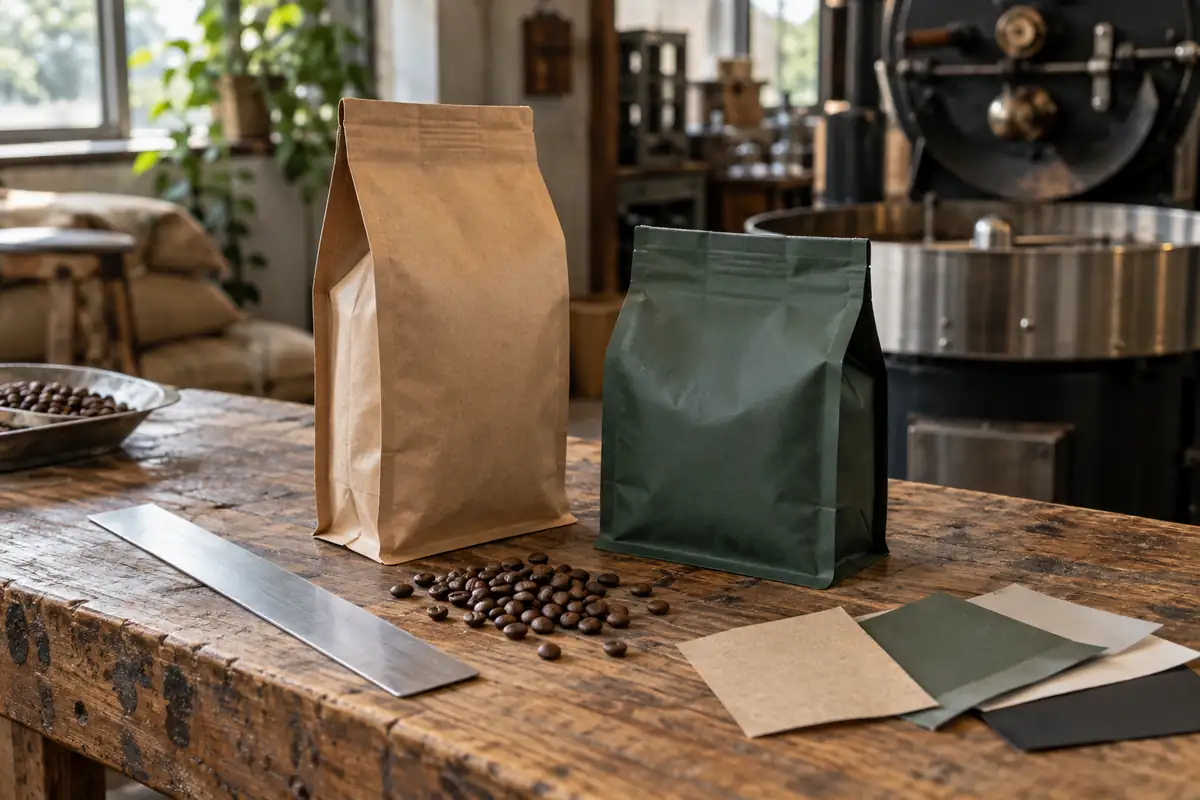
Side gusset bags are widely used for whole beans and ground coffee. Their tall, compact shape is familiar to coffee buyers and works for retail, subscription and food-service packaging.
Coffee packaging may require:
- A one-way degassing valve
- A high-barrier material
- A tin tie or resealable closure
- Enough headspace for filling and sealing
- Protection from oxygen, moisture and light
Not every coffee bag needs the same structure. The time between roasting and packing, expected shelf life and distribution conditions should be reviewed before selecting the material.
Read Why Are Side Gusset Bags a Good Choice for Coffee Packaging? for more information about valves, closures and coffee applications.
Other suitable products
Side gusset pouch packaging bags can also be used for:
- Nuts and dried fruit
- Chips and other dry snacks
- Pet treats and dry pet food
- Supplement powders
- Protein powder
- Tea and herbal products
- Candy and confectionery
- Baking ingredients
Products that contain oil, release gas or absorb moisture may need a higher-barrier laminate. Tell us the product type and required shelf life before selecting the structure.
Material choices
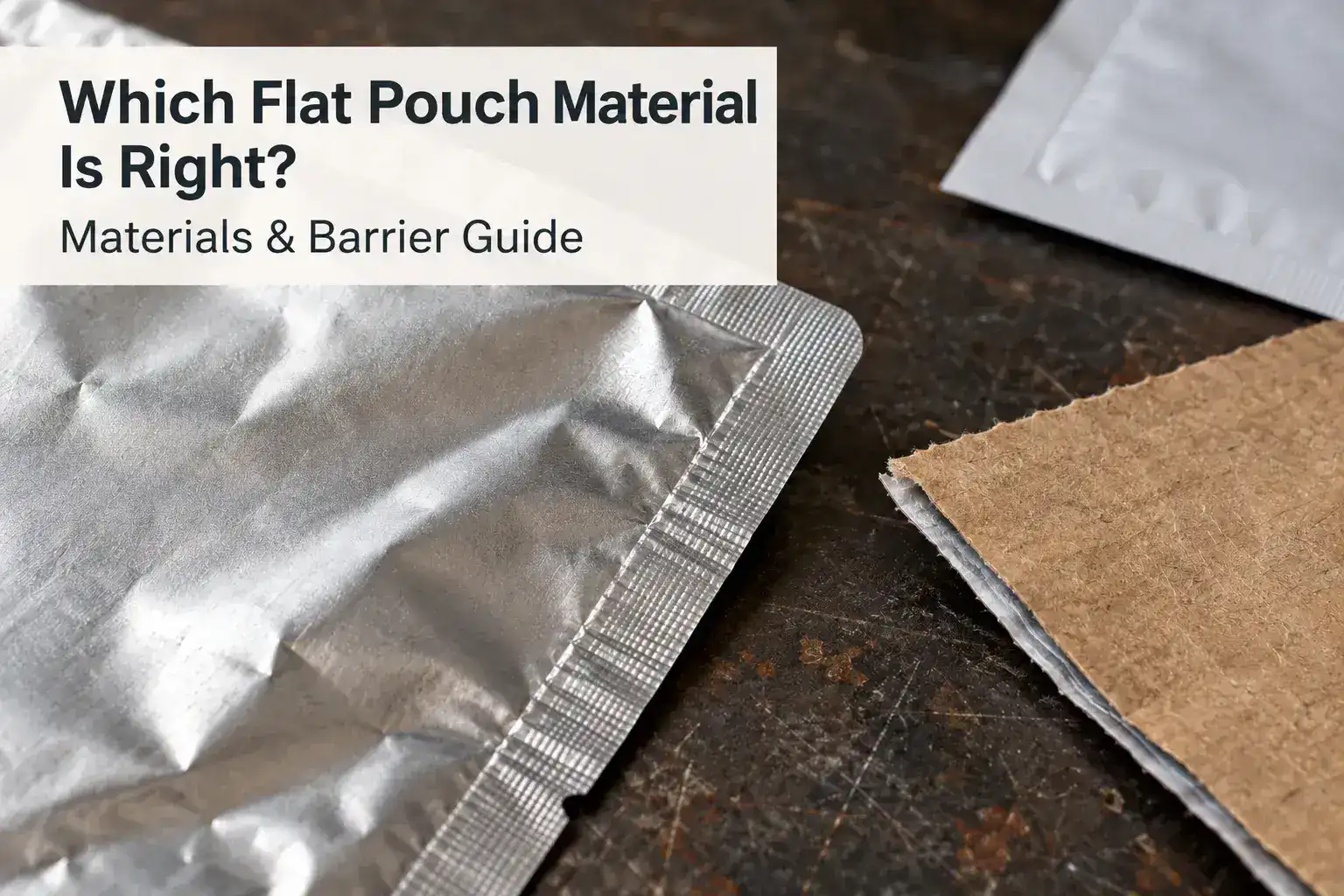
The material controls the bag’s barrier, stiffness, appearance and sealing performance.
PET/PE
PET/PE is a basic laminate for dry products with lower barrier requirements or a shorter distribution cycle. It can also be used when the design includes a clear window.
PET/VMPET/PE
PET/VMPET/PE contains a metallized barrier layer. It provides better protection against oxygen, moisture and light than a simple transparent laminate.
This structure is commonly considered for coffee, snacks, pet treats and powders.
PET/AL/PE
PET/AL/PE uses an aluminum foil layer when stronger protection from light, oxygen or moisture is required.
Foil can suit sensitive products or longer storage periods, but it is not necessary for every project. The decision should be based on the product rather than appearance alone.
Kraft paper structures
Kraft paper gives the bag a natural surface and additional stiffness. The paper layer usually does not provide the main barrier. Inner plastic, metallized or foil layers handle most of the protection and sealing.
A kraft surface does not automatically make the completed bag recyclable.
Recyclable mono-material PE
Mono-material PE structures keep most of the package within the same plastic family. Their stiffness, barrier and sealing behaviour may differ from conventional laminates.
Check the recycling requirements in the target market and test the structure with the actual product before production.
See How to Choose the Right Material for Side Gusset Bags for a more detailed material comparison.
Closure and functional options
Degassing valve
A one-way valve allows gas to leave the package while limiting outside air from entering. It is often used for coffee packed soon after roasting.
The valve position must be confirmed before printing so it does not cover artwork, labels or important information.
Tin tie
A tin tie allows the top of the bag to be folded and closed again after opening. It is a familiar option for coffee and bakery packaging.
The bag still needs an initial heat seal when product protection and tamper evidence are required.
Resealable closure
Some side gusset constructions can include a resealable zipper or another closure. Compatibility depends on the bag design, filling process and required opening width.
Clear window
A clear window allows customers to see the product. It may be suitable for snacks, pet treats and some dry food products.
Light-sensitive products usually need an opaque or metallized structure instead of a large transparent window.
Tear notch and hang hole
A tear notch can help customers open the bag. A hang hole may be added when the pack needs to hang on a retail display.
Their positions should be checked together with the top seal and artwork.
How to choose the correct size
Choose the dimensions using product volume, not weight alone.
A side gusset bag has three main measurements:
The height must include the filled product, headspace and top sealing area. The opening also needs to fit the manual or automatic filling process.
If the size is uncertain, send us one of the following:
- The product’s target weight and bulk density
- An existing bag
- A product sample
- The required finished dimensions
- Filling machine specifications
A filling test helps confirm capacity, sealing space and the final appearance before the full order is produced.
Read How to Determine the Right Size for a Side Gusset Bag for the complete sizing process.
Digital or gravure printing
Digital printing
Digital printing is suitable for smaller orders, multiple designs and projects that may require artwork changes. It does not require printing cylinders, which can reduce setup time and initial printing costs.
Gravure printing
Gravure printing is commonly used for larger production volumes and stable, repeat orders. It supports detailed printed designs but requires printing cylinders for each colour.
The order quantity, number of designs and expected repeat volume should be reviewed before selecting the printing method.
What should you provide for a quote?
Send the following details so we can recommend a suitable specification:
- Product type
- Target fill weight
- Expected shelf life
- Preferred bag dimensions
- Material or barrier requirements
- Required valve, closure or window
- Number of printed designs
- Order quantity
- Manual or automatic filling
- Target sales market
If you do not have a finished specification, send the product information first. We can review the material, size and functional options with you before sampling.
From sample to production
The usual process is:
- Confirm the product, size and material.
- Select the printing method and additional features.
- Review the quotation and bag specification.
- Prepare and check the artwork.
- Approve the sample or proof.
- Start production.
- Inspect and arrange shipment.
For a new product, test the bag with the actual contents before approving full production. This helps identify problems with capacity, sealing, valve position or the filled shape.
Order custom side gusset bags
Tell us what you plan to pack, the required weight and how the bag will be filled. We can recommend a suitable size, material and printing method for your custom side gusset bags.
Get a Custom Quote