How is the material structure built?
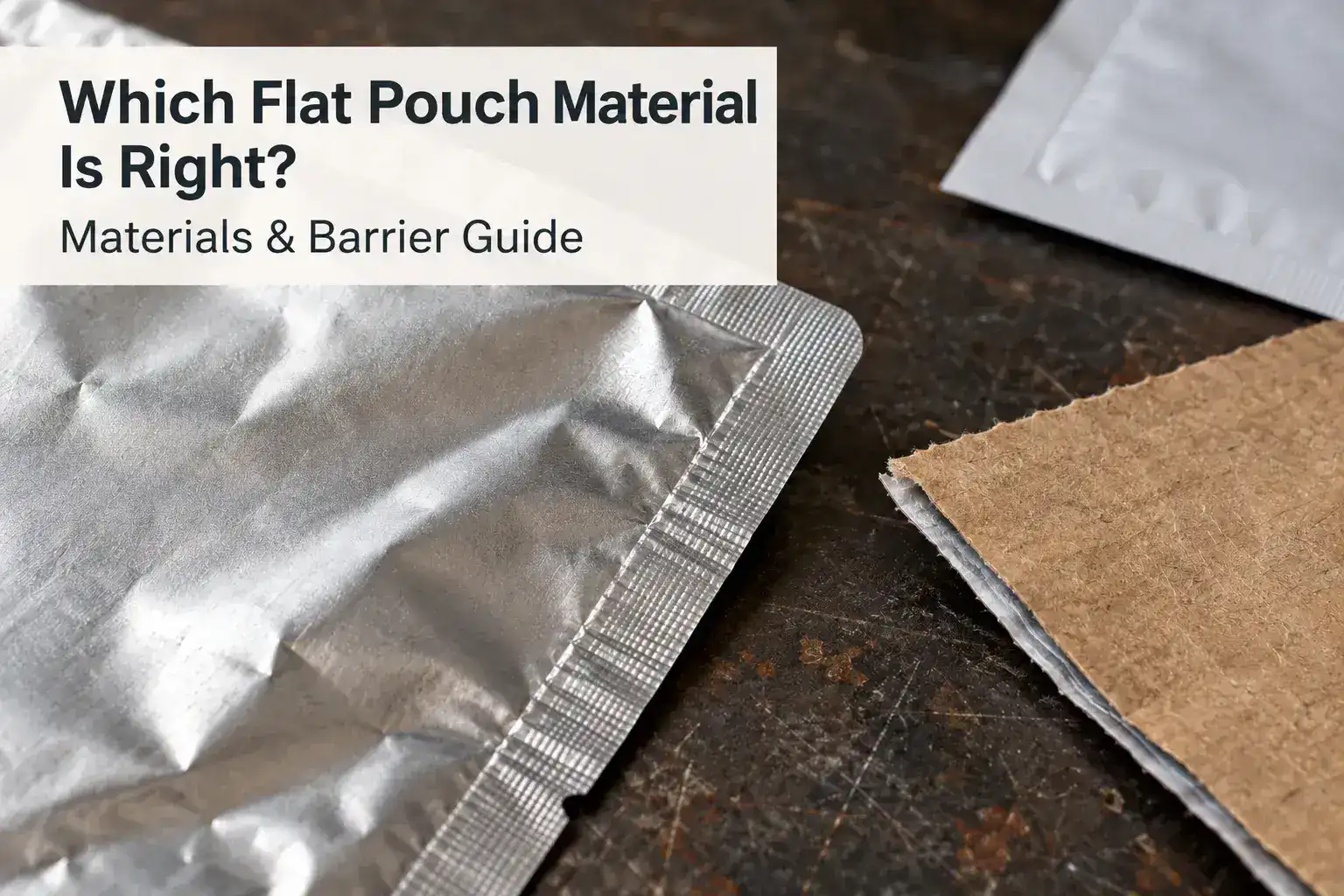
Most side gusset bags use several layers bonded together. One material rarely handles printing, barrier protection and heat sealing equally well.
The outer layer carries the print and protects it from rubbing. The middle layer controls oxygen, moisture or light. The inner PE layer contacts the product and forms the seal.
Common materials include:
- PET for printing and stiffness
- VMPET for a metallized barrier
- Aluminum foil for stronger light and oxygen protection
- PE for product contact and heat sealing
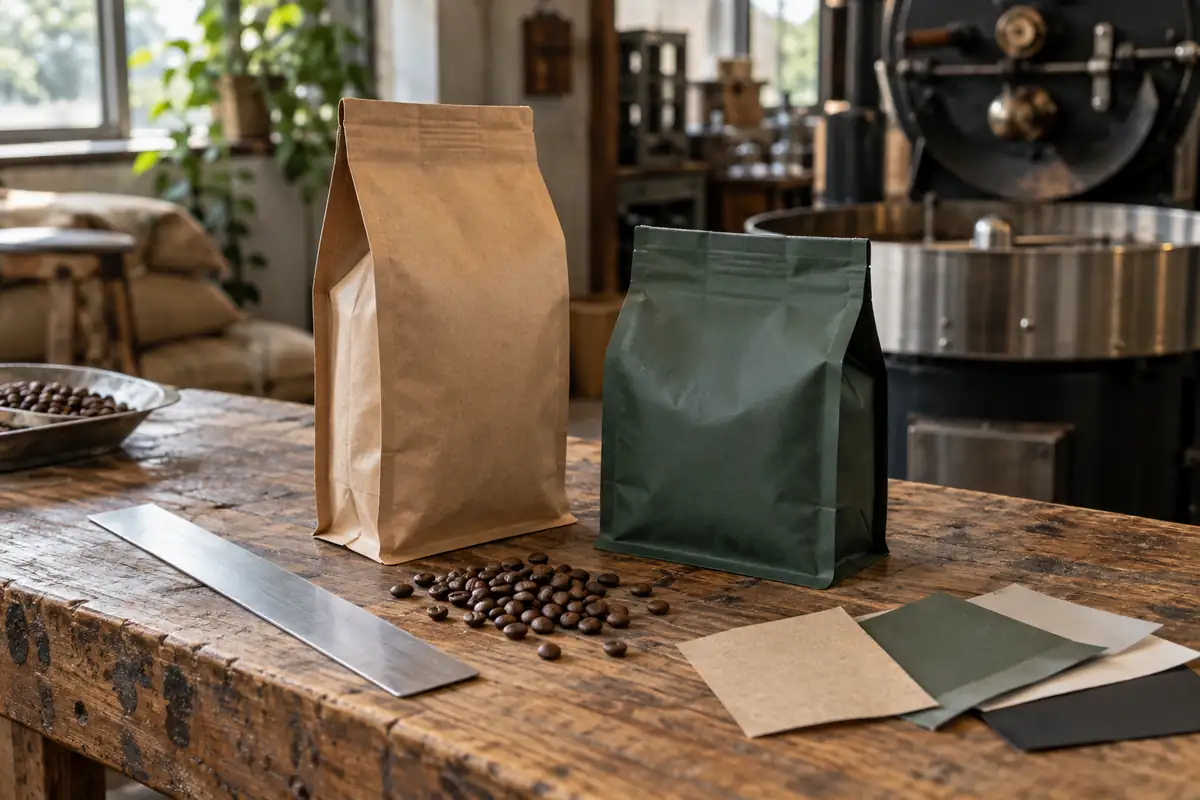
- Kraft paper for a natural surface
The film thickness and layer combination can be adjusted. They still need to suit the product, filling temperature, bag weight and sealing equipment.
Begin with the product
In practice, we first ask what is going into the bag and how it will be sold.
A material recommendation usually depends on these questions:
- Is the product affected by oxygen, moisture or light?
- Does it contain oil or have a strong aroma?
- How long should it remain fresh?
- Will it be stored in heat or humidity?
- Will customers open the bag more than once?
- Does the target market require recyclable packaging?
Freshly roasted coffee, oily pet treats and sensitive powders usually need more protection than dry products sold within a short period.
Common material structures
PET/PE
PET/PE is a simple laminate. PET gives the bag a printable outer surface and some stiffness. PE provides the inner sealing layer.
It can work for dry products with a short sales cycle or packaging that needs a clear window. It is less suitable when the product needs strong protection from oxygen and light.
PET/VMPET/PE
VMPET is plastic film with a thin metallic coating. It improves the barrier against oxygen, moisture and light without using a full foil layer.
This structure is often used for coffee, nuts, snacks, pet treats and supplement powders. For many dry products, it gives enough protection without moving to a heavier foil structure.
PET/AL/PE
PET/AL/PE contains an aluminum foil layer. It is used when light, oxygen or moisture could quickly affect the product.
Sensitive powders and products with a longer shelf life may need this level of protection. But foil is not the right answer for every project. It costs more and makes the finished laminate harder to recycle.
Kraft paper/VMPET/PE
This structure combines a kraft surface with metallized film and a PE sealing layer. Brands usually choose it for its paper texture and traditional appearance.
The kraft layer is mainly visual. The inner films provide most of the barrier and sealing performance. A bag that looks like paper may still contain plastic and metallized layers.
Recyclable mono-material PE
A mono-material PE bag keeps most of the package within one plastic family. This can make it suitable for PE recycling systems where collection facilities exist.
Compared with conventional laminates, the feel, stiffness and barrier may be different. Test the structure with the actual product rather than selecting it from the recyclable label alone.
Recycling rules also vary by market. A claim that works in one country may not apply in another.
Which structure fits your product?
Use this table as a starting point:
| Product requirement | Suggested direction |
|---|
| Short sales cycle and low barrier demand | PET/PE or another basic laminate |
| Better oxygen, moisture and light protection | PET/VMPET/PE |
| Strong light and oxygen protection | PET/AL/PE |
| Kraft appearance with an inner barrier | Kraft paper/VMPET/PE |
| Recyclability is a main requirement | Mono-material PE |
The final specification may change after checking the product, filling line and transport conditions.
Choosing material for coffee
Coffee needs protection from air, moisture and light, but the required barrier is not identical for every roaster.
Whole beans and ground coffee behave differently. The time between roasting and packing also matters, as does the expected time in storage and distribution.
Coffee packed soon after roasting may need a one-way degassing valve. The valve releases gas, while the laminate protects the coffee from outside conditions. One cannot replace the other.
For more about this bag format, read Why Are Side Gusset Bags a Good Choice for Coffee Packaging?.
What information does the supplier need?
A supplier can give a more useful recommendation when the request includes:
- Product type and target weight
- Expected shelf life
- Storage and transport conditions
- Required zipper, valve or other features
- Manual or automatic filling
- Main sales market
- Recycling or composting requirements
If the product has not used flexible packaging before, send a sample. A small filling and sealing test often answers questions that a specification sheet cannot.
After selecting the material, use the side gusset bag size guide to confirm the width, height, gusset and sealing space.
Making the final choice
A foil structure may be necessary for one product and unnecessary for another. The goal is to use enough protection without adding layers that do not solve a product requirement.
Set the barrier level first. Then decide on the appearance, print method and recycling direction. Before mass production, test the proposed structure with the product and the intended sealing process.
View our custom side gusset bags or send us your product type, target weight and shelf-life requirement for a material recommendation.