Which Material Is Best for Coffee, Snacks, Pet Food, and Powders?
The examples below are starting points for discussion, not automatic specifications.
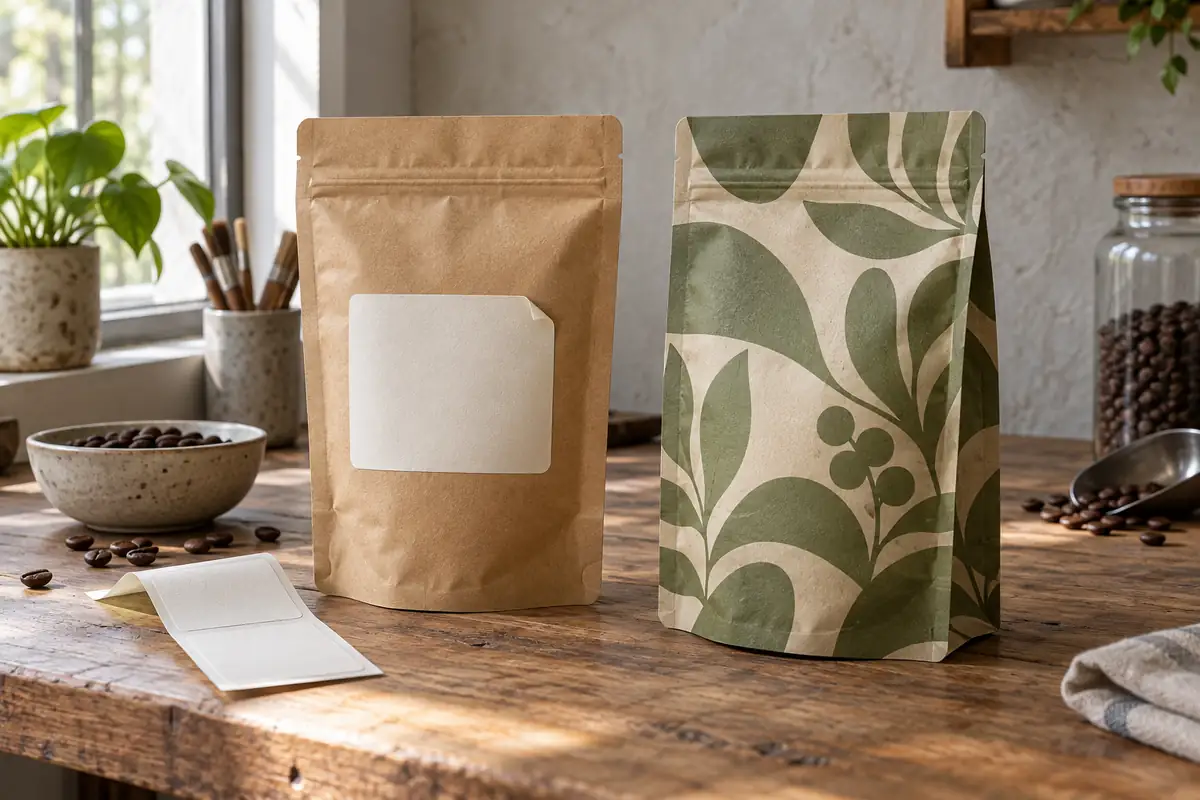
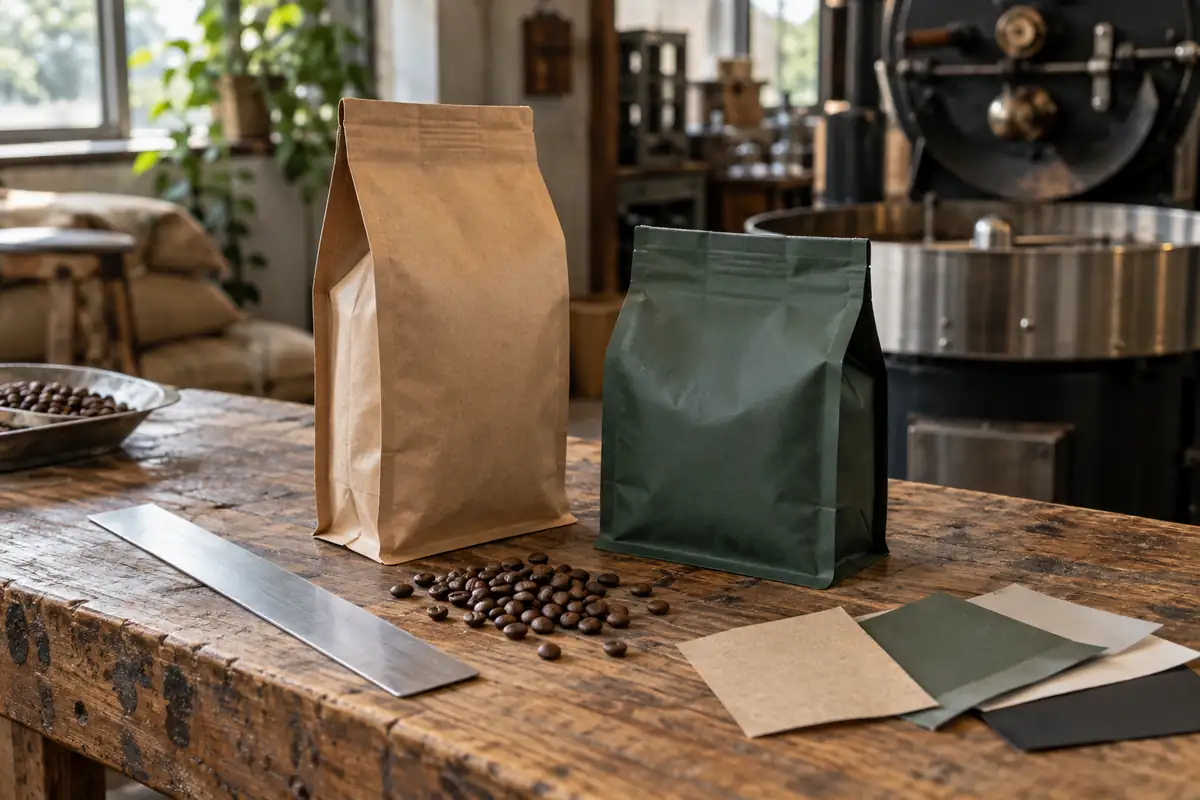
Coffee beans and ground coffee: A high-barrier metallized or foil laminate is commonly considered because coffee aroma and flavor are sensitive to oxygen and light. Ground coffee generally needs more protection than whole beans because it has more exposed surface area. The final structure should be tested with the actual roast, pack size, valve, and shelf-life target.
Chips, nuts, and dry snacks: Moisture and oxygen protection are usually the main concerns. A clear PET/PE structure may work for a short distribution cycle, while fatty nuts or longer shelf-life products may need a metallized barrier. If the product has sharp edges, puncture resistance should also be checked.
Pet food and pet treats: The material must handle grease, aroma, heavier fill weights, and repeated consumer use. A robust laminated structure is often appropriate. Seal strength and drop testing are just as important as the headline barrier value.
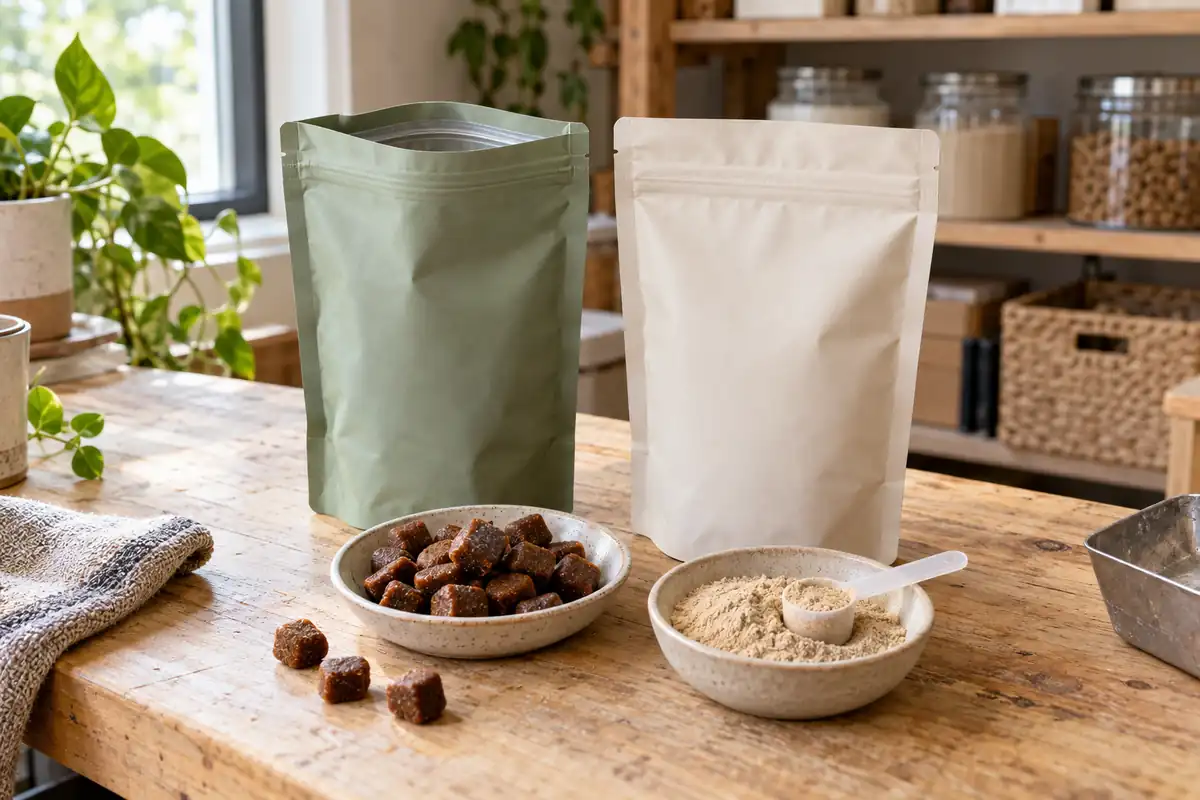
Protein powder, milk powder, and drink mixes: Moisture protection is critical because many powders absorb humidity and may clump. Fine powder can also contaminate the sealing area, so the sealant layer and filling process need to be tested together.
Tea, dried fruit, and confectionery: The required barrier varies widely. Delicate tea aromas and light-sensitive products may justify an opaque high-barrier structure, while products with a fast sales cycle may not need foil-level protection.
Already chosen your pack weight? Use our flat bottom pouch size guide before finalizing the material. A larger pouch has more film surface and headspace, which can affect package performance.