Which zipper, valve or window does the pouch need?
Add a feature only when it solves a clear problem. Each component takes up space and can affect filling, artwork, cost and recyclability.
Zipper
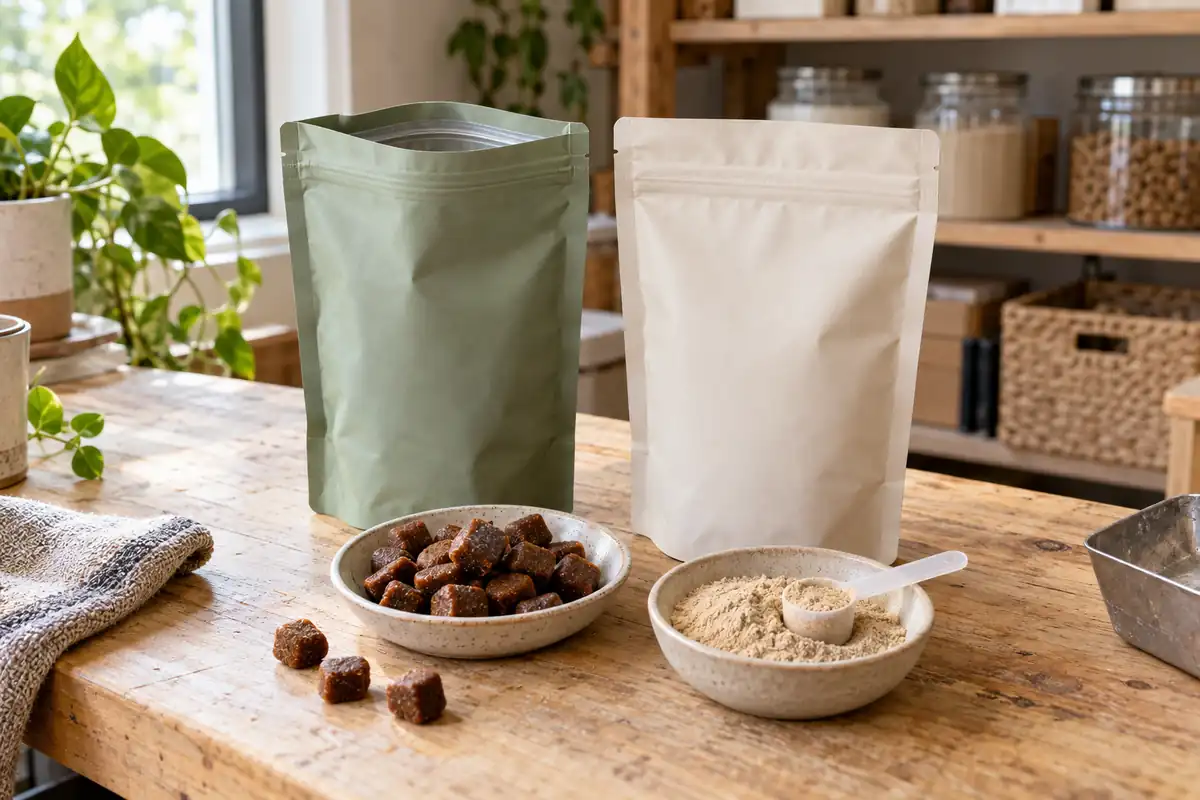
A standard press-to-close zipper suits products that customers use over several occasions. Coffee, nuts, tea, snacks and pet treats often fall into this group. Powder-resistant profiles can be considered when fine particles are likely to enter the zipper track.
The zipper does not replace the factory heat seal. Retail pouches are normally sealed above the zipper. Enough space must remain between the zipper and the top edge for filling and sealing.
One-way degassing valve
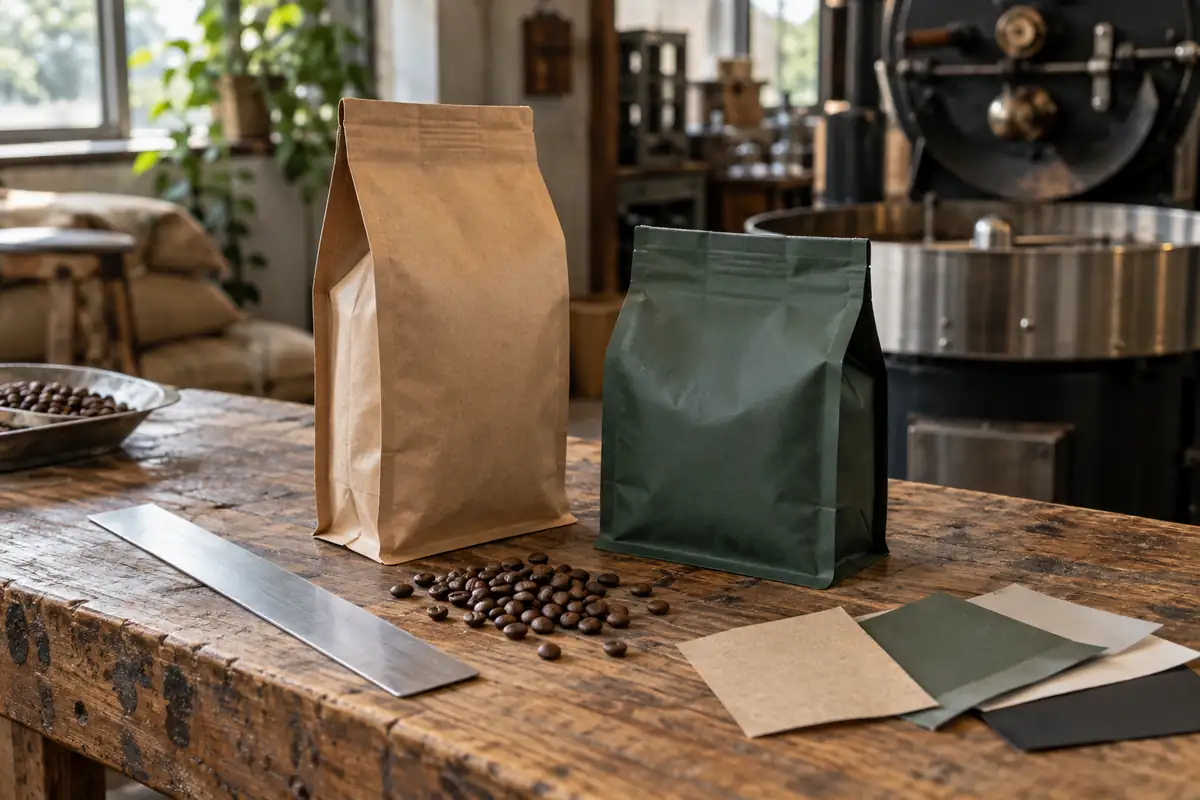
Freshly roasted coffee releases carbon dioxide. A one-way valve lets this gas leave while restricting air from entering through the same opening. Whether a pack needs one depends on the coffee, resting time before packing and distribution period.
A valve cannot compensate for a poor barrier film or a leaking top seal. The Specialty Coffee Association’s review of roasted coffee shelf life discusses oxygen control, valve packaging and seal integrity. See the SCA review.
Clear window
A window lets buyers see candy, snacks, tea, grains or pet treats. It is a weaker choice when the product needs protection from light. The clear area may also have a different oxygen or moisture barrier from the opaque part of the pouch.
Tear notch, hang hole and handle
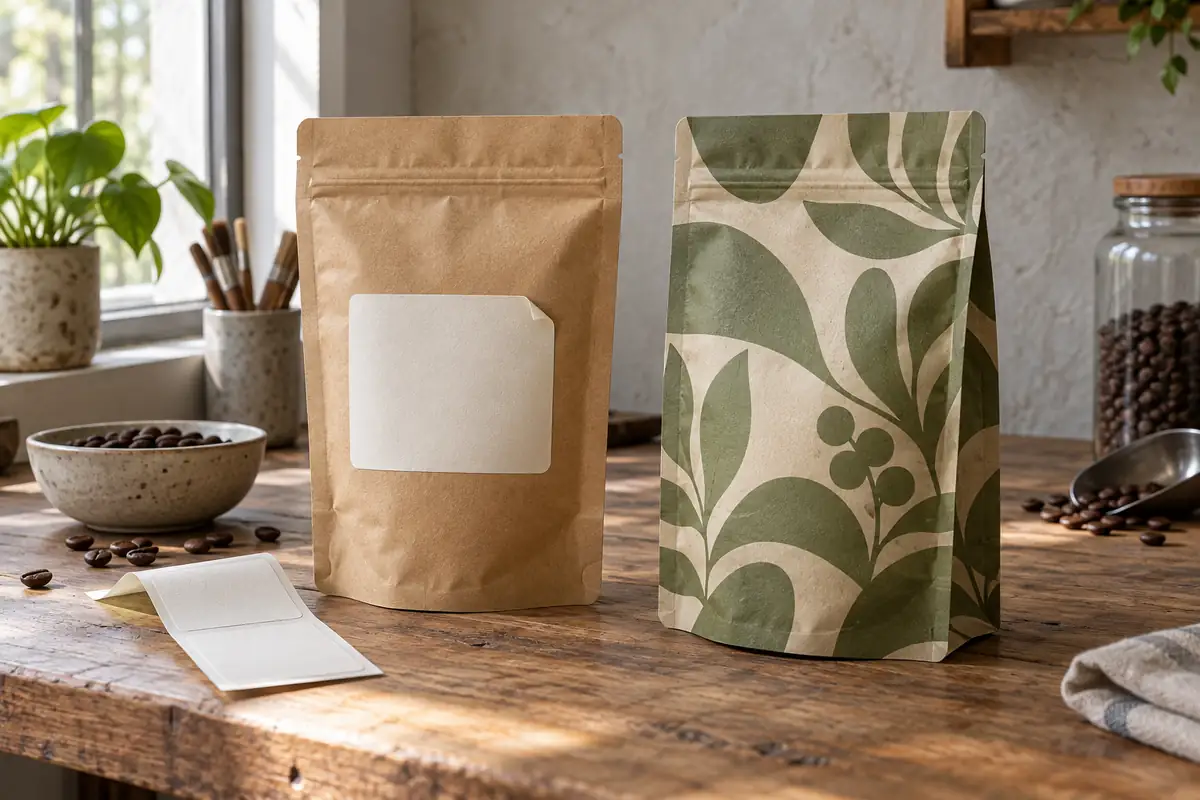
A tear notch gives customers a clear place to open the sealed top and is normally positioned above the zipper. A hang hole is relevant only when the retailer will display the pouch on hooks. Large pet food or bulk packs may need a handle, but the material and handle area must carry the filled weight.
Feature materials matter when a recyclable package is planned. CEFLEX advises that zippers, spouts, closures and valves should align with the main material stream where possible. Its flexible-packaging design guidance explains how added components affect recycling design.
The flat bottom pouch feature guide gives more detail on zipper types, valve placement, windows and opening features.
What information should you send to the pouch supplier?
A useful quotation request contains more than the desired bag weight. Send the information that affects the finished construction:
Product name and whether it is oily, aromatic, moisture-sensitive or light-sensitive
Net weight and approximate product volume
Target unopened shelf life
Storage and distribution conditions
Filling method and filling temperature
Preferred material or an existing pouch sample
Required zipper, valve, window or other feature
Destination market and any recycling claim under consideration
Artwork quantity, number of designs and expected order quantity
An existing pouch can be a useful reference, but send a physical sample or a complete dimensioned drawing. Two pouch styles with the same outside dimensions do not always have the same usable capacity.
Before mass production, test the pouch with the product inside. Check filling, top sealing, zipper operation, valve position, shelf shape and transport. This step is faster and less costly than correcting a printed order after production.
For available structures and custom options, visit the custom flat bottom pouch product page.