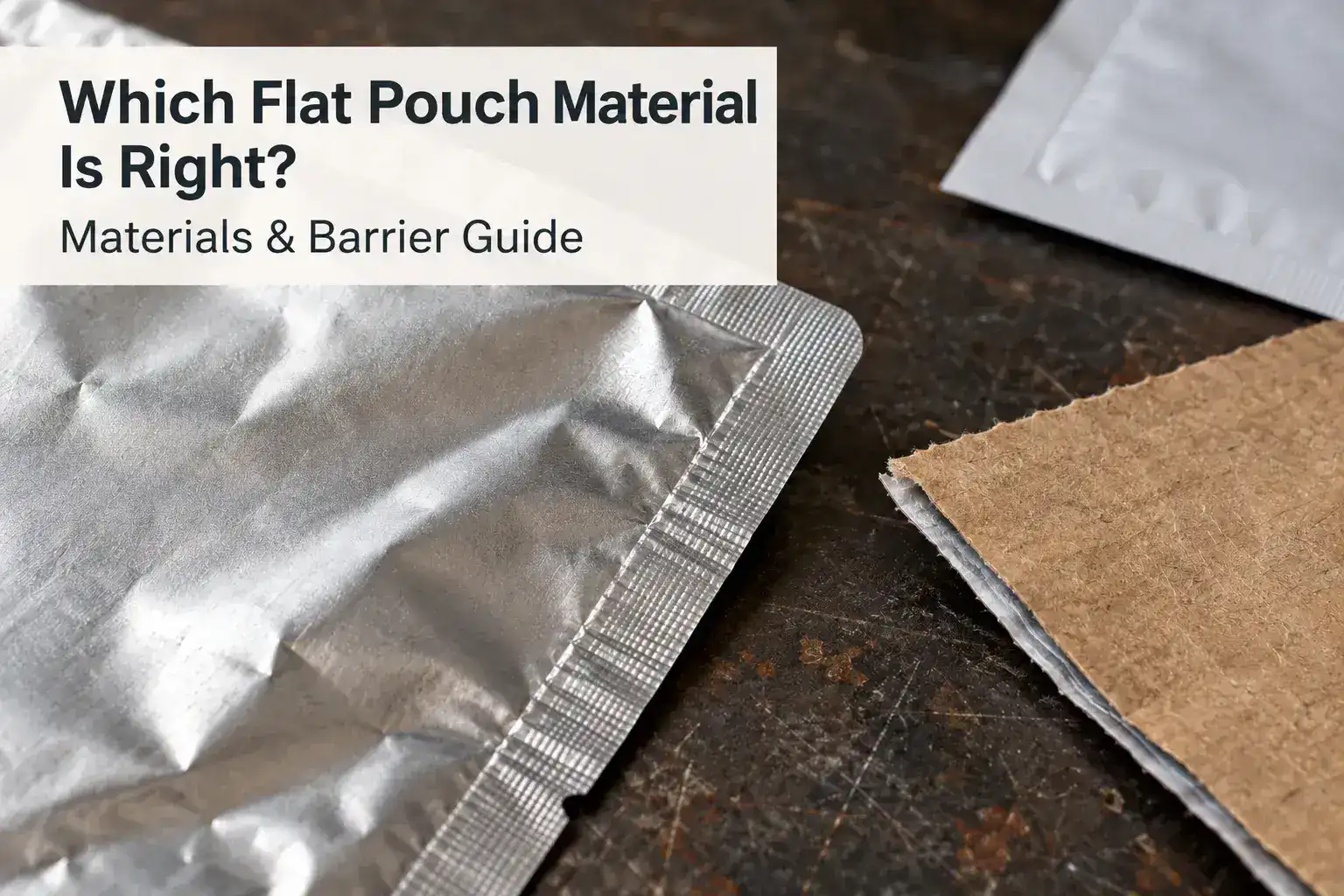
Choose the material by the protection your product needs and the conditions used to fill and seal it. Identify the required moisture, oxygen and light protection before choosing the finish. To compare two films, request their specifications and the relevant test results.
Key Takeaways
- Identify moisture, oxygen, light and handling risks before selecting a laminate.
- A metallic or kraft appearance does not establish barrier performance.
- Review windows and closures as part of the finished pack.
- Request specification and test evidence relevant to your product and market.

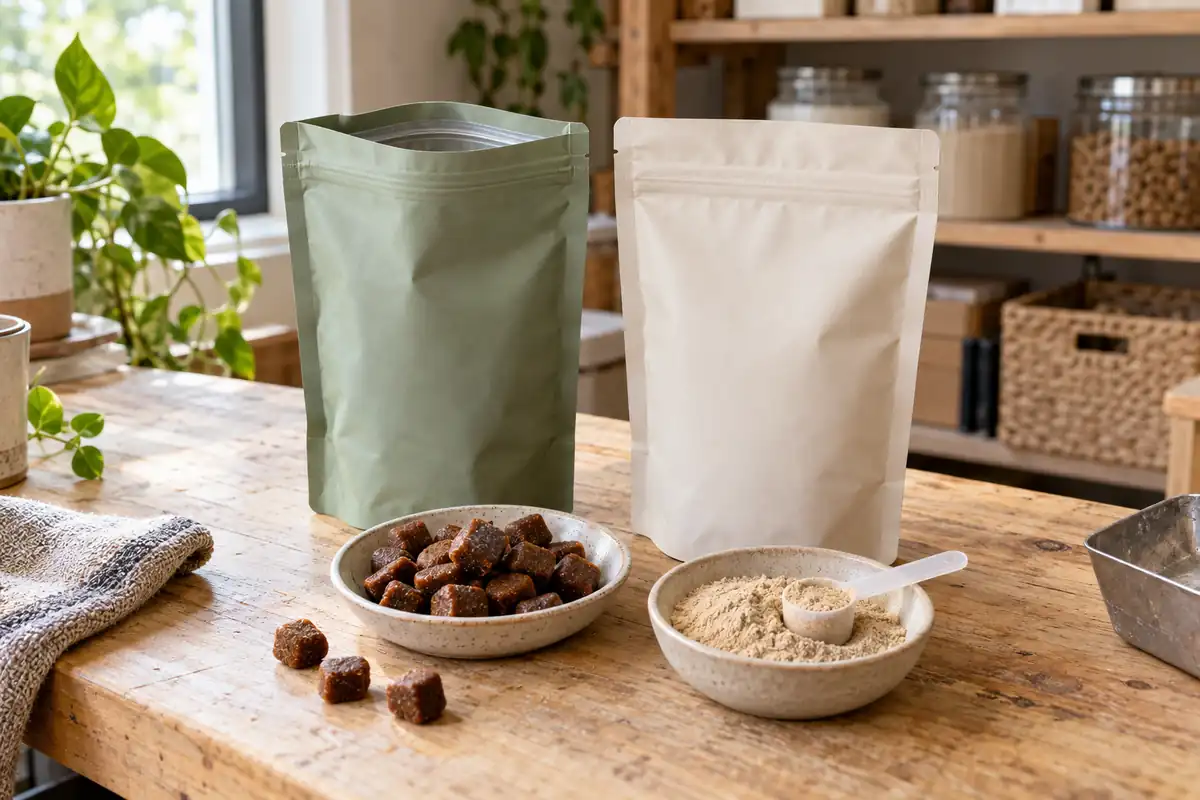
Illustration of a multi-layer flat pouch. Confirm the layer specification and performance requirements for your order.
What does your product need protection from?
Tell the supplier what changes during storage. A powder that picks up moisture needs a different discussion from a product affected mainly by light. Include the storage conditions and target shelf life.
| Question about your product | Requirement to discuss |
|---|
| Does it absorb moisture or lose texture? | Moisture protection and seal integrity |
| Is it sensitive to oxygen? | Oxygen protection, packing process and seal integrity |
| Does light affect quality or appearance? | Light protection and any proposed window |
| Does it have sharp edges? | Puncture resistance and handling tests |
| Is it a liquid or sauce? | Contact compatibility, filling conditions and leakage checks |
Use existing product stability information where available. If the required shelf life has not been validated, the packaging project should include a suitable testing plan.
Which material structures does Illusionpack list?
Illusionpack’s flat pouch product page lists PET/PE, BOPP/CPP, PET/AL/PE, PET/VMPET/PE and PE/PE options. The quotation should identify which structure is proposed and the performance it must meet.
| Listed option | What to clarify before selection |
|---|
| PET/PE | Required protection, finished film specification and sealing conditions |
| BOPP/CPP | Visibility requirements, moisture protection and sealing conditions |
| PET/AL/PE | Light protection, barrier requirements and handling performance |
| PET/VMPET/PE | Barrier requirements and whether the specified metallized structure meets them |
| PE/PE | Product protection, machine compatibility and evidence supporting any recyclability claim |
Record the layer structure, total thickness and required performance in the specification. Similar material names can cover different films.
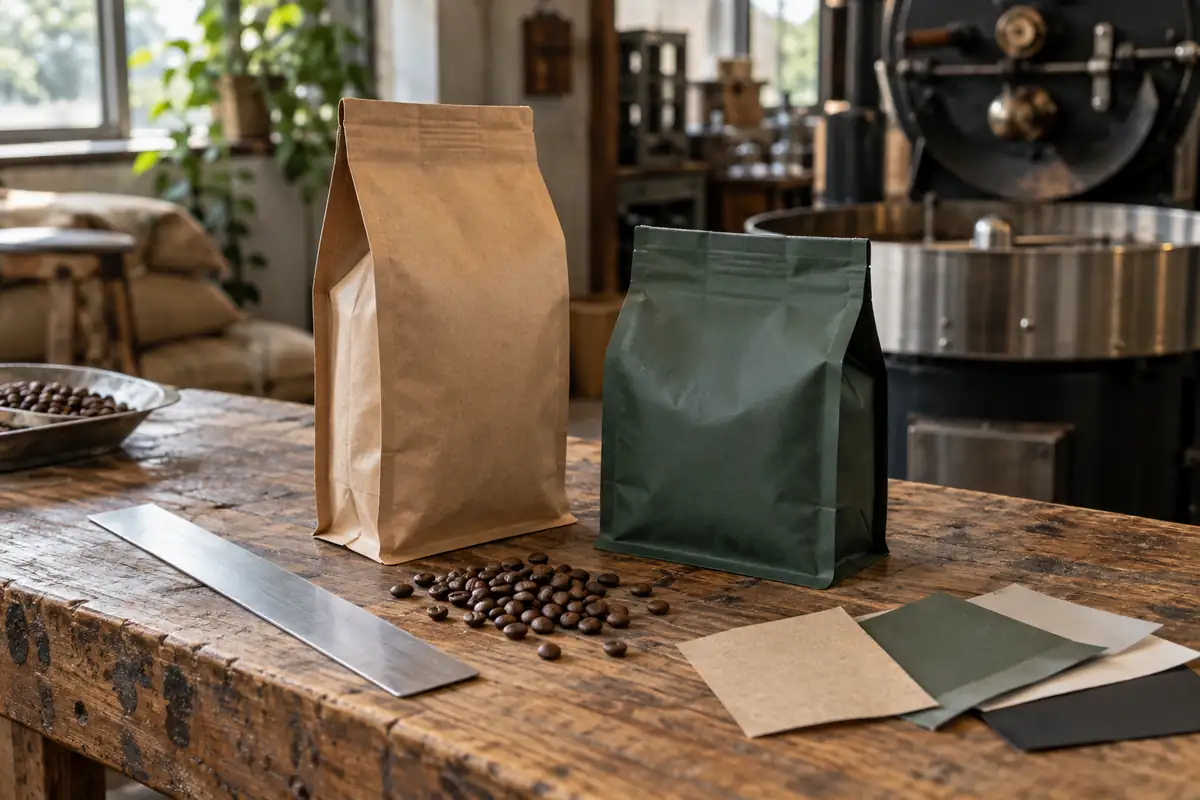
Metallic flat pouch example. Confirm the film structure and barrier results separately from the metallic finish.
Should you choose the thickest film available?
Specify the result you need before changing the thickness. If the concern is puncture damage, ask for a handling test. If it is moisture pickup, compare the moisture-barrier results and their test conditions.
Can you add a clear window to a protective pouch?
A window needs to be reviewed as part of the complete material design. If your product needs light protection, decide whether visibility is worth the exposure and confirm the protection provided by the window area. A metallic appearance elsewhere on the pack does not answer that question.
Review a clear window as part of the complete material design, especially when light protection matters.
What evidence should you request before approval?
Request the evidence needed for your application: barrier results with test conditions, sealing guidance, product-contact documentation and any agreed filled-pack tests. Confirm which documents the supplier can provide before approving the material.
Similarly, describe a structure as recyclable only when the specific construction, components and intended market support that claim. “PE/PE” alone is not a complete consumer-disposal instruction.
How can you start a material discussion?
Send Illusionpack your product, target shelf life, storage conditions, filling temperature, packing equipment and market requirements. Include any stability data or problems with the current pack.
Discuss your material requirements before approving the artwork or ordering production samples.
Which product examples should you compare?
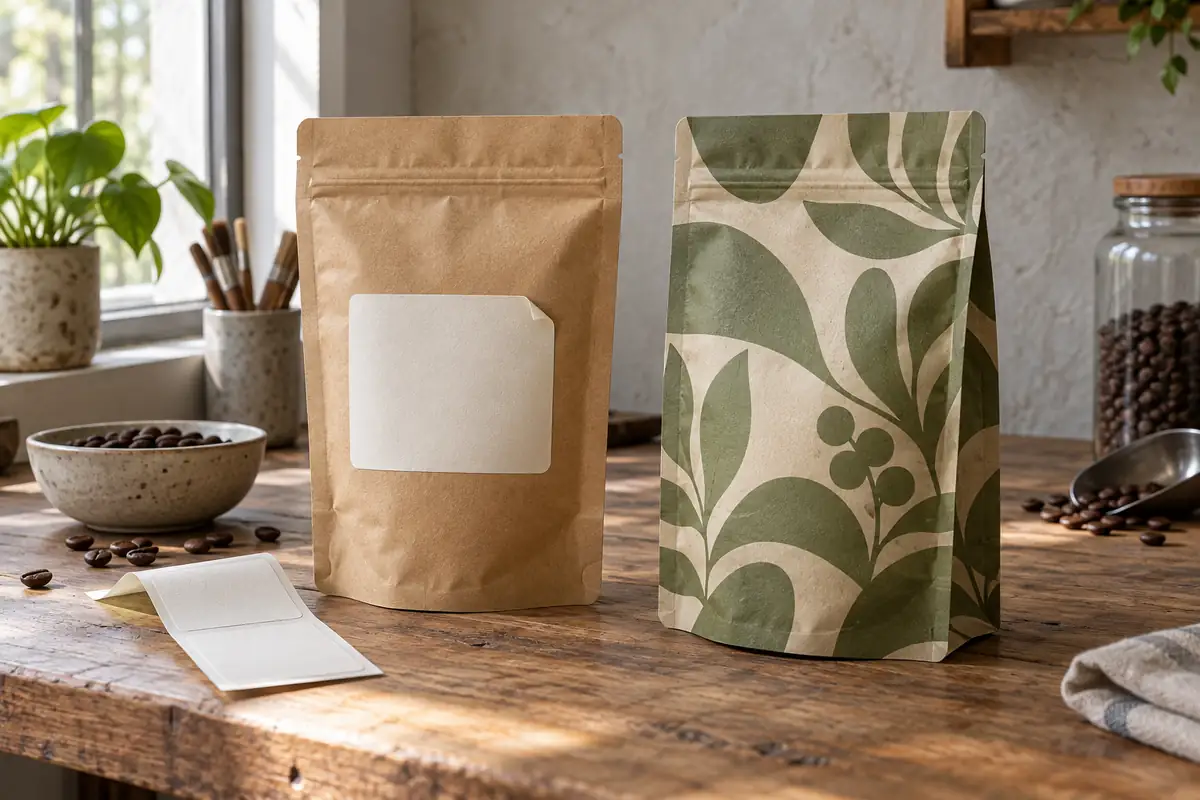
Separate the surface finish from the film specification when comparing these products. Soft touch and spot UV describe appearance or feel; ask for the layer structure as well.
Does the application change the material discussion?
Yes. Describe the contents, expected storage and filling process in the material brief. Compare the product uses on our food packaging page and supplement packaging page with your own storage and filling requirements. If repeated opening and dispensing are important, the pet food packaging page shows packs intended for repeated opening. For a liquid product, review spout pouch alternatives while confirming whether a flat pouch is appropriate.
Which resources help you compare the complete package?
Our features and accessories guide addresses windows and closures. Read the stand up pouch materials article for additional material-selection questions, and the supplement packaging article for the interaction between contents and closures. The compostable pouch article concerns compostable stand up pouches; check what evidence a proposed compostability claim needs for the flat pouch you intend to buy.
Printing and finish should be reviewed alongside the structure. Compare digital printing with gravure printing, then review the matte and gloss comparison to distinguish visual and tactile choices from product-protection requirements.
What do technical references help you check?
WildKind’s sizing guidance explains why product volume and density need to be considered alongside the pouch specification. Fresh-Lock’s application guide discusses closure choices by application, while Sealed Air’s three-side seal literature shows examples of barrier laminate and functional options. For your order, request the results and documents tied to the specified film.