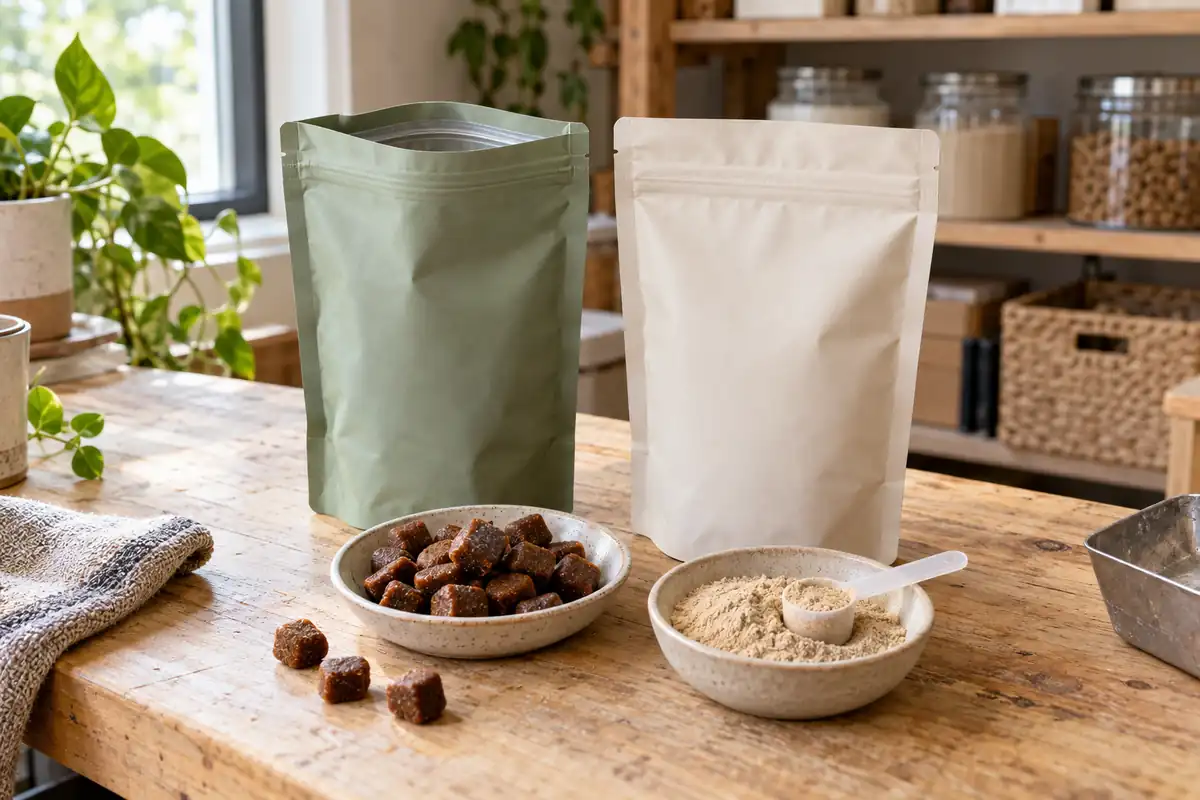
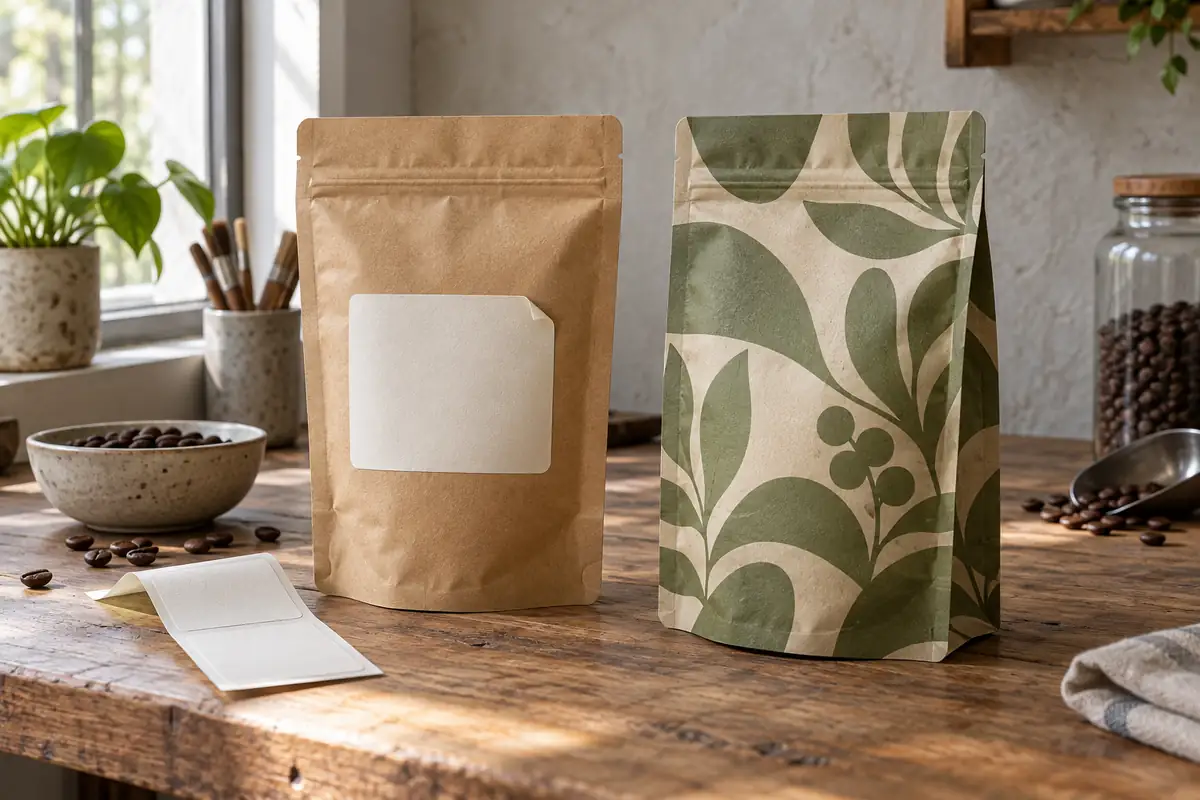
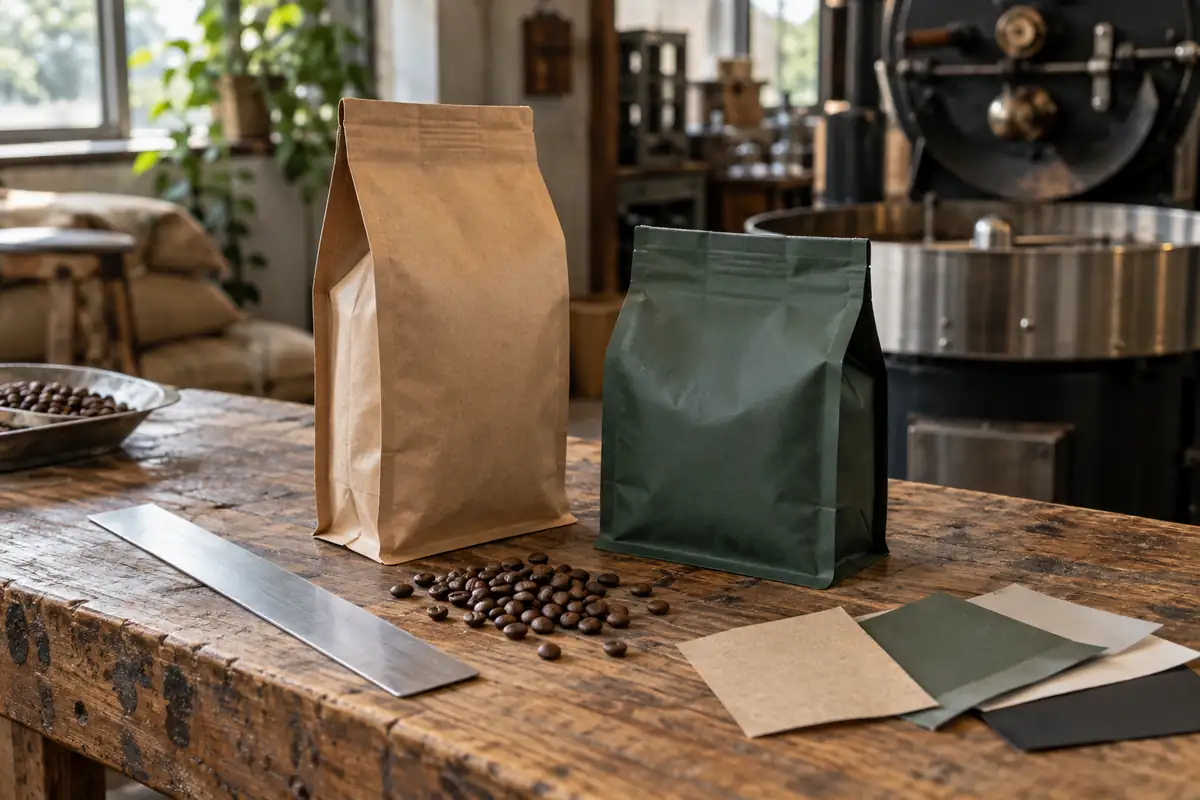
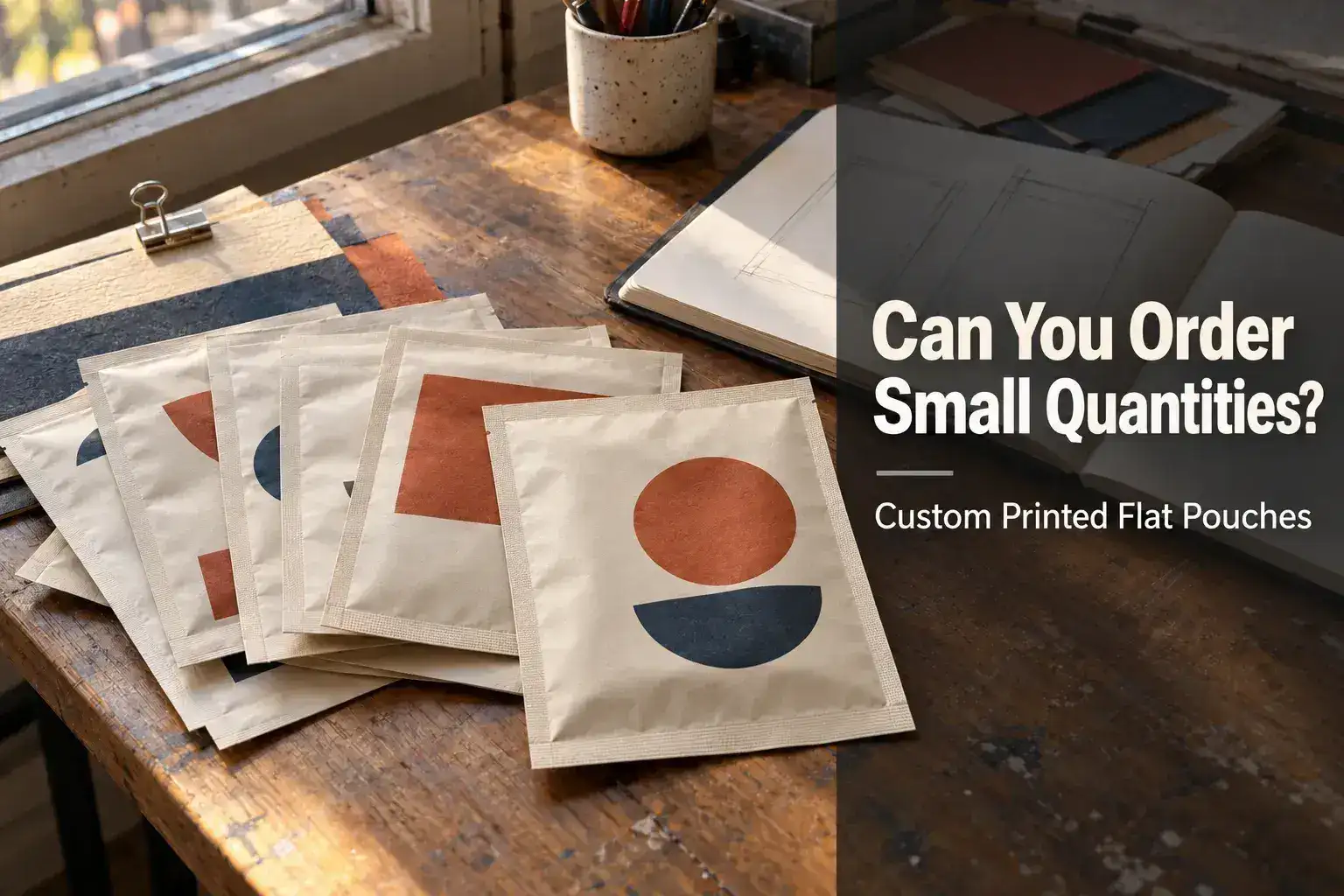
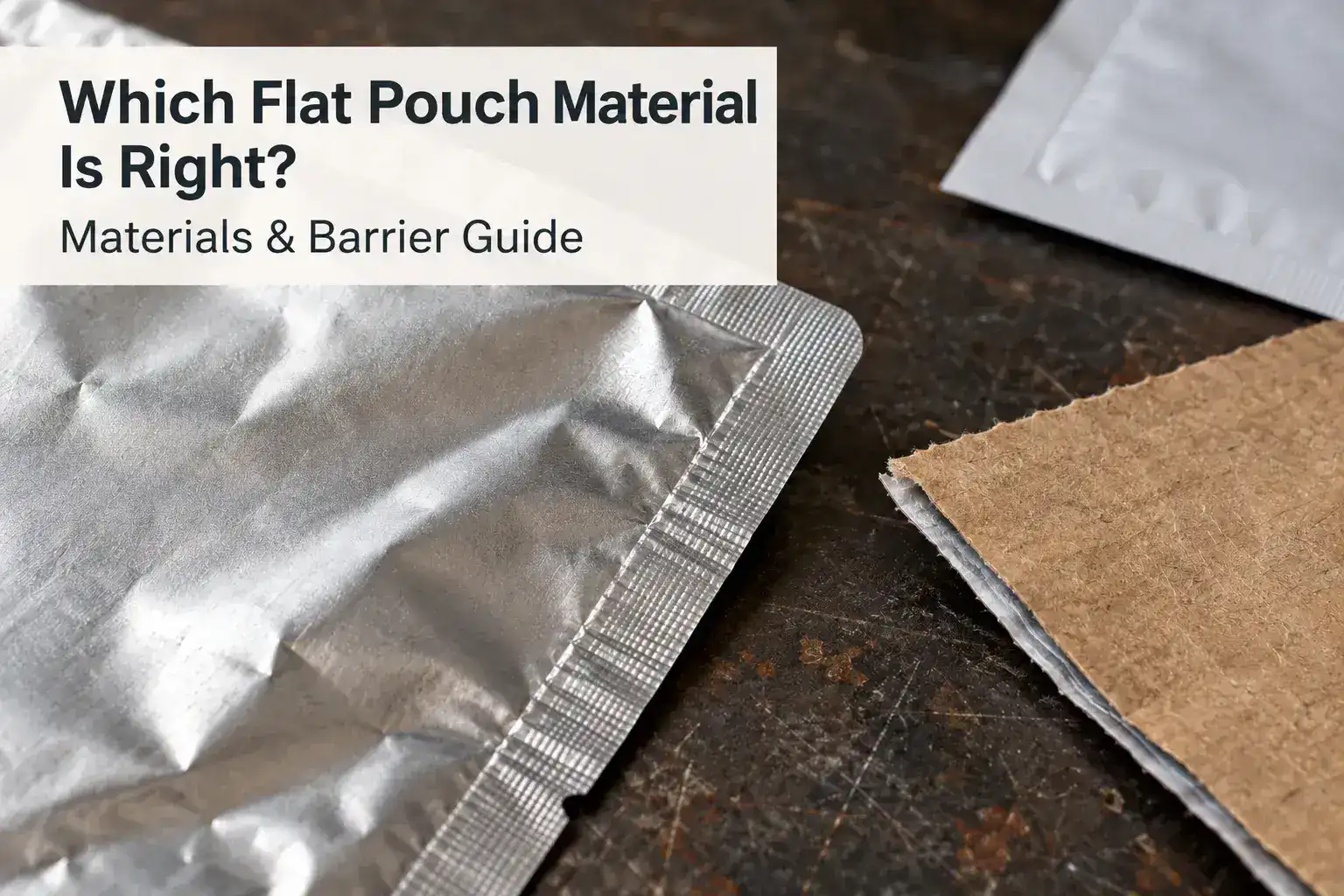
A flat pouch is a flexible package without an expandable bottom gusset. Choose it for products sold flat, displayed on hooks or packed in small portions. If the package needs to stand upright on a shelf, compare it with a stand up pouch before choosing.
Check how the filled pack will be displayed first. That decision tells you whether to continue with a flat pouch or compare a format with a standing base.
Key Takeaways
- Choose flat pouches when the pack will lie flat, hang or serve as a compact portion pack.
- Flat pouches and flat bottom pouches are different constructions.
- Confirm usable space, material protection and opening features together.
- Approve a filled and sealed sample before committing to production.

Almonds shown as an application example. Photo: Nadiatalent, Wikimedia Commons, public domain. Unmodified.
Is a flat pouch the same as a three-side seal pouch?
A three-side seal pouch is a common flat pouch construction: three edges are sealed before filling, leaving one opening for the final seal. Sealed Air also uses “flat pouch” for this format in its three-side seal product literature.
Suppliers may use “lay flat pouch” or “sachet” for related formats. Confirm the construction on a drawing rather than relying on the name alone. A flat pouch is also different from a flat bottom pouch, which has a base designed for upright presentation.
Should you choose a flat pouch or a stand up pouch?
A hanging snack pack and a powder pouch that must stand beside other products have different requirements. Use the display method to narrow the choice, then test the fit.
| Your requirement | Starting point to investigate |
|---|
| A sample or single-serving pack | Flat pouch |
| A slim product displayed on hooks | Flat pouch with a suitable hang hole |
| A package expected to stand upright | Stand up pouch |
| Customers repeatedly open and close the pack | Check whether a zipper fits the chosen size and construction |
| Liquid contents | Confirm material compatibility, filling conditions and seal performance before approval |
Illusionpack’s custom flat pouch page lists options for snacks, supplements, powders, personal care products and samples. Tell the supplier what will go inside and how you will fill it before selecting a structure.

Round holes and euro slots are display options. Confirm the hole position on the approved drawing.
What should you check before selecting a flat pouch?
After choosing the format, check the space left for filling and sealing. A tight fit is a problem if product reaches the top-seal area.
- Fit: Identify the product dimensions or fill volume and leave space for the final seal.
- Protection: Explain whether moisture, oxygen or light affects the product, and provide the intended storage conditions.
- Use: Decide whether a tear notch, zipper, window or hang hole serves a real purpose.
- Production: Explain how the pouch will be filled and sealed, including any special temperature requirements.
Tear notches and rounded corners address opening and handling; they do not establish product shelf life.
Can a flat pouch keep your product fresh?
Shelf life depends on the film specification and the sealed pack. Give the supplier your storage conditions and the product changes you need to prevent, such as moisture pickup or loss of aroma.
How can you confirm the choice before ordering?
Fill and seal a suitable sample with your actual product. Check the filled shape, opening, dispensing and display method, then record the approved dimensions and features.
To discuss a project with Illusionpack, request a sample or quotation with your product, fill weight, display method and intended quantity.
Which product examples should you compare?
For a first sample request, choose the examples closest to the way your pack will be displayed and opened.
What changes when you pack food, supplements or liquids?
For a snack pack, work through portion size and how the customer will empty it. Our food packaging page covers those applications. For vitamins or powders, review the portion and refill examples on the supplement packaging page. The products shown under candy packaging give you artwork examples to discuss. The recipe and storage conditions still determine the specification.
If upright presentation is essential, compare stand up pouch options. If customers need controlled pouring, review spout pouch options and the sauce and condiment spout pouch example as alternative formats before choosing a flat pouch.
How should you choose features and prepare a brief?
Use our features and accessories guide to list the features your customer will use. Review material options separately from the finish, then discuss digital printing or gravure printing with your quantity per design in hand. For finish selection, the matte versus gloss article explains why appearance should be checked on a sample.
What do independent technical references clarify?
WildKind’s sizing guidance distinguishes flat and stand up formats and explains why product volume matters. Fresh-Lock’s closure application guide shows that reclosable features are selected around different applications. Ask which closure and film specification is included in your quotation.