What substances are restricted or banned in food-contact packaging?
In 2022, the FDA revoked food-contact authorization for 23 phthalates previously used as plasticizers and adhesives (NSF). BPA is prohibited specifically in packaging for infant formula under 21 CFR 175.300, and several states — California, New York, Connecticut, Minnesota, and Vermont among them — restrict PFAS in paper-based food packaging (SGS USA). None of these bans are coffee-specific, but any custom packaging manufacturer supplying US retailers should be able to confirm their materials sit clear of all three.
How does FDA testing differ from EU testing for the same bag?
The FDA generally tests total extractive material removed from a food-contact surface, while the EU sets migration limits for individual substances alongside an overall migration limit (Measurlabs). A bag that clears FDA testing isn’t automatically cleared for EU markets — brands selling coffee packaging bags in both regions need documentation for both frameworks, not just one.
How do you size the bag’s barrier spec for your product’s real shelf life?
Most sizing mistakes come from designing around average conditions instead of worst-case ones. A roaster targeting an eight-month shelf life but sizing the barrier around a typical six-week distribution lead time leaves the coffee exposed during the slower stretches — an overstocked SKU, a seasonal dip in retail turnover, an unplanned shipping delay. The correct spec accounts for the longest realistic time the bag sits closed, from packaging through the customer opening it, not the average case.
In practice, that means working backward from three numbers: the target shelf life on the label, the OTR the barrier material needs to hit that target, and the buffer for distribution delays. A coffee packaging supplier with in-house lab testing can usually confirm the OTR for a proposed structure before it goes into production, which is worth doing before committing to a full print run.
How is sustainability changing plastic bag choices for coffee?
Regulation is pushing the industry away from multi-layer composite films and toward mono-material recyclable structures — the EU’s packaging waste rules are a major driver of that shift (MarkWide Research). The trade-off is real: mono-material films currently give up some barrier performance and seal strength compared to traditional foil laminates. For a brand with a shorter shelf-life target, that trade-off is manageable. For long shelf-life whole bean coffee shipped internationally, foil laminate still outperforms most mono-material options as of this writing.
How does custom printing fit into coffee bag packaging?
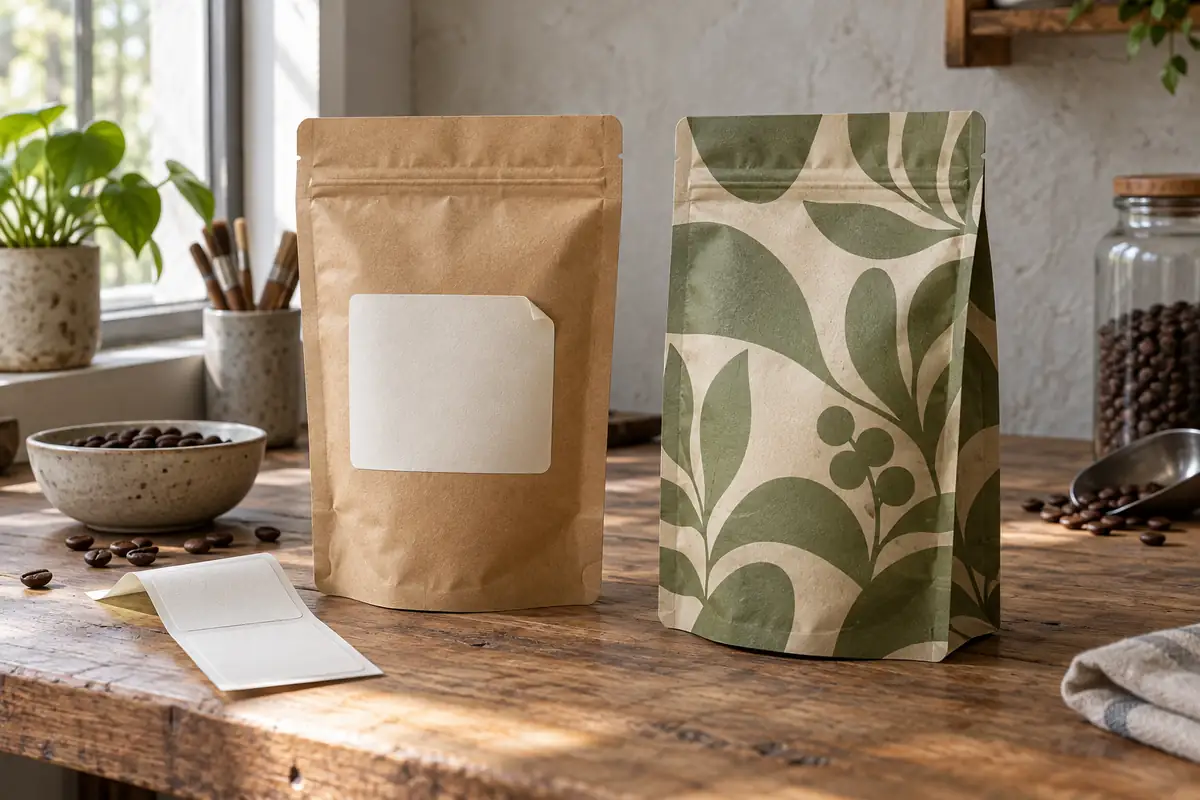
Custom printing is where the packaging spec and the brand identity meet, and it changes more than the artwork. Adding a print layer to a flexible barrier structure affects seal integrity and, if the ink formulation isn’t food-contact compliant, migration risk on the inside surface. This is why custom printed packaging for coffee needs to be specified alongside the barrier structure, not bolted on after the material choice is locked in.
Two printing methods dominate coffee bag printing: rotogravure, which suits high-volume runs with consistent color across large orders, and digital printing, which works better for shorter runs, seasonal packaging, or brands that update artwork frequently. Established coffee brands — Starbucks’ retail bags are a widely recognized example — combine a high-barrier laminate structure with detailed custom print work, which shows the two decisions don’t have to compete: a bag can carry strong branding and still meet the barrier requirements a long shelf life demands.
How do you choose a coffee packaging bag supplier or manufacturer?
Look for four things before signing off on a coffee packaging companies shortlist: documented FDA compliance for every material in the stack, in-house barrier and seal testing rather than reliance on a generic spec sheet, printing capability that matches your order volume (rotogravure for bulk, digital for shorter runs), and a minimum order quantity that fits your actual production scale. A coffee bags manufacturer that can quote custom flexible barrier packaging, handle the printing, and supply valve integration under one roof cuts the coordination work of managing separate custom packaging manufacturer and printing vendors.
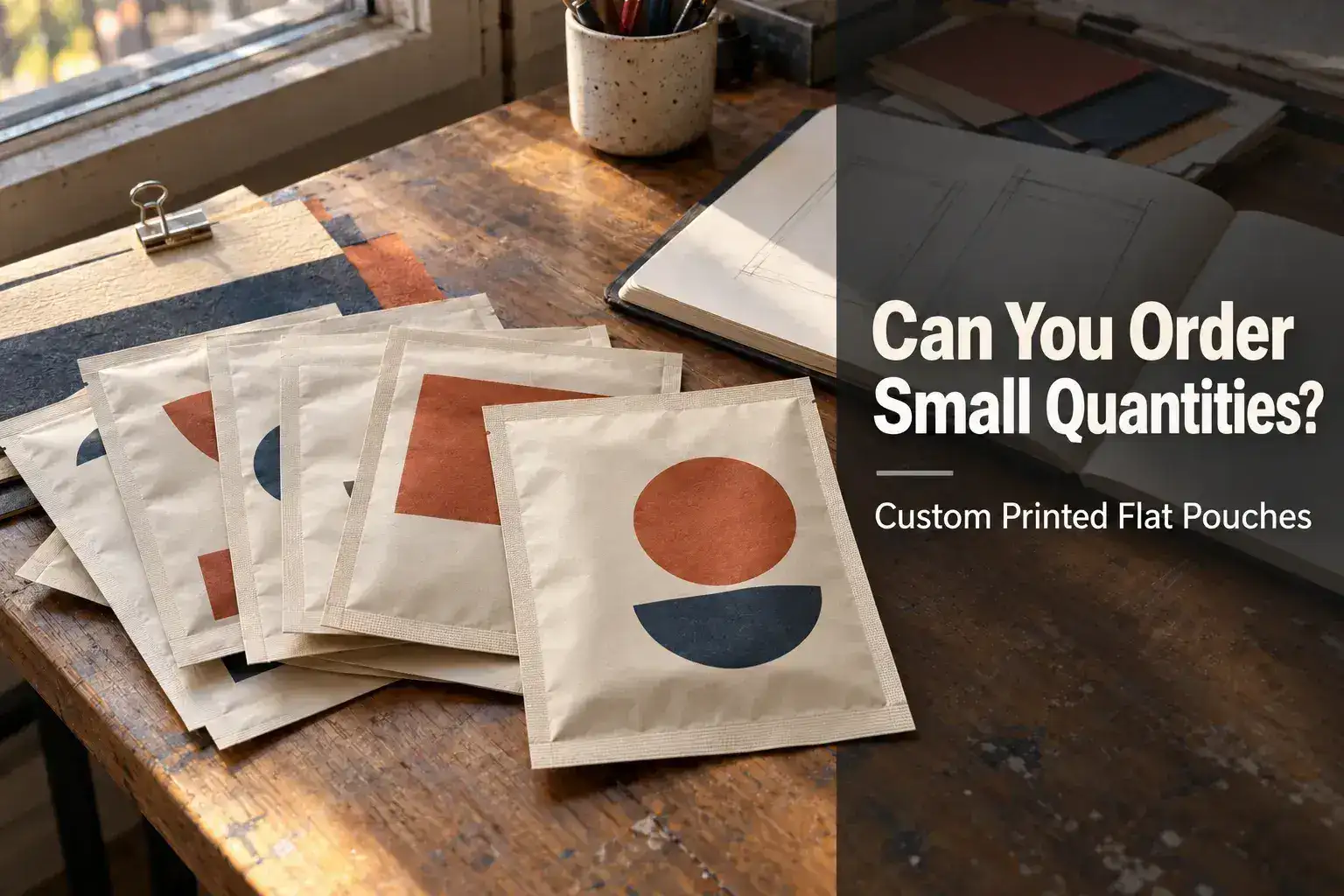
For brands starting out or testing new SKUs, ask potential coffee pouch suppliers about sample runs before committing to coffee bags wholesale pricing — a small test batch confirms seal quality and barrier performance before locking in a larger order.
Frequently asked questions
1.Can you use regular plastic bags for coffee packaging?
You can, but only for products with a short shelf life. A single-layer PE bag has no meaningful oxygen or light barrier, so it works for pre-ground coffee sold within a few weeks — not whole bean coffee meant to sit on a shelf for months.
2.How long does coffee stay fresh in a valve bag?
It depends on the barrier material, not just the valve. A foil laminate with a valve typically holds quality for 9–12 months; a PE bag with a valve still degrades faster, because the barrier — not the valve — controls oxygen ingress.
3.Is aluminum foil packaging safe for direct food contact?
Yes, when the food-contact layer meets FDA 21 CFR requirements for the specific polymer used in the inner sealant layer. The foil itself is inert; it’s the laminate structure as a whole that needs certification.
4.Are compostable coffee bags as effective as traditional barrier bags?
Not yet, for long shelf-life whole bean products. Compostable films are improving, but most current options trade off oxygen barrier performance for compostability, which suits short shelf-life or ground coffee formats better than premium whole bean lines.
5.What’s the difference between custom printed packaging and stock coffee bags?
Stock bags come in fixed sizes and generic or minimal branding, meant for smaller orders or private-label runs. Custom printed packaging is built to a brand’s specific dimensions, barrier requirements, and artwork, usually through a custom packaging manufacturer that handles both the film structure and the print run together.
Conclusion
Choosing a coffee bag comes down to five decisions made in order: how long the coffee needs to stay fresh, what oxygen and moisture barrier that shelf life requires, whether FDA compliance is documented for every layer in the stack, whether the format needs a degassing valve, and how the material and print structure hold up against current sustainability rules. Get those five right, and the packaging protects the coffee instead of becoming the reason it goes stale before it reaches the cup.