Choose the size from the product dimensions or fill volume, allowing room for the seals and closure. The listed width and height describe the outside of the pouch; they do not tell you how much usable space remains inside. Fill and seal a sample before approving the size.
Key Takeaways
- External width and height do not equal usable internal space.
- Fill volume and product thickness matter; net weight alone is insufficient.
- Side seals, top seals and zippers consume space.
- Test filling, sealing and dispensing with your actual product.

Use the dimension drawing to distinguish external dimensions from seal margins and available filling space.
Can you choose a pouch size from product weight alone?
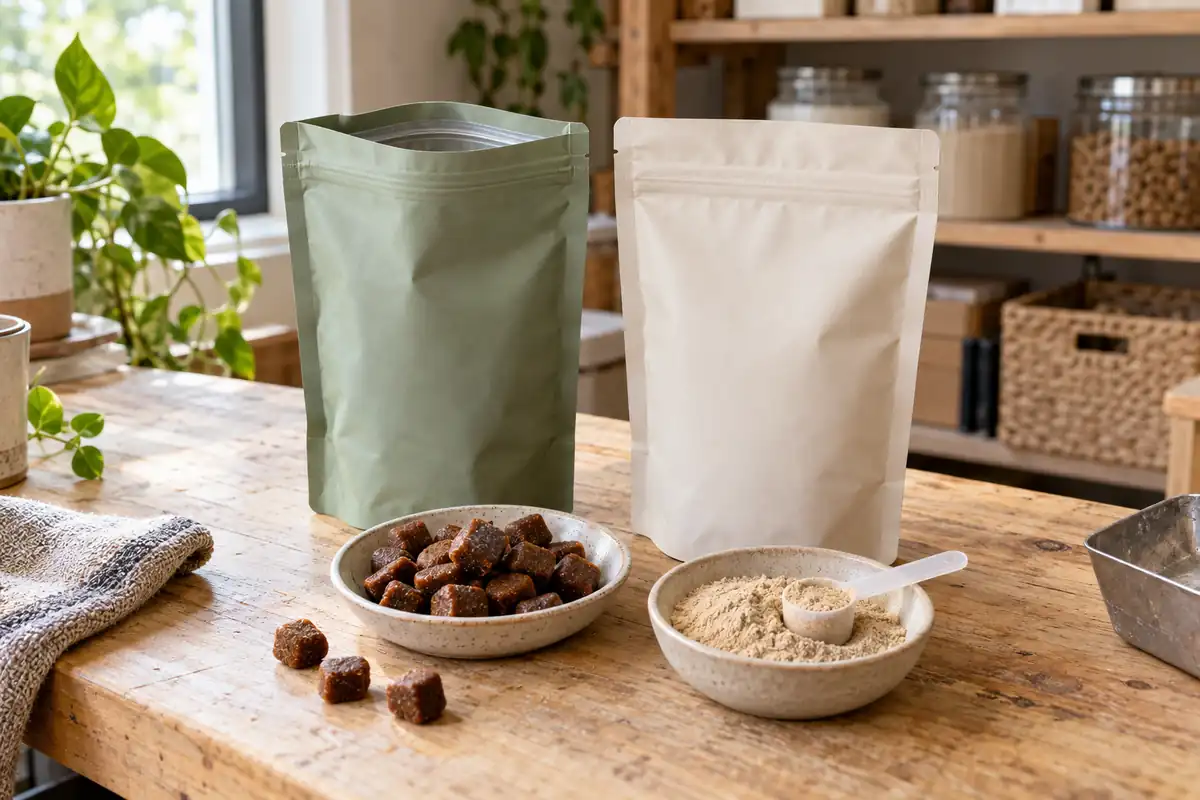
Two products weighing the same amount can need different pouch sizes because they occupy different volumes. A powder, dried snack and solid item may need different pouch dimensions even when their labels show the same net weight.
For loose products, measure the volume of one intended serving. For a solid item, measure its width, length and thickness, including any tray or inner wrapping. WildKind’s pouch sizing guidance likewise identifies product volume and density as sizing factors.
How much usable width is left after the side seals?
For a pouch with seals on both side edges, subtract both side seal widths from the external width to estimate the clear internal width.
For example, a hypothetical 120 mm-wide pouch with two 8 mm side seals has about 104 mm between those seals. Check product thickness in a filled sample before using the calculation to choose a size.
The usable height also depends on the bottom construction, final top seal, zipper position and other fittings. Ask for a dimensioned drawing that identifies each of these areas.
What dimensions can Illusionpack discuss?
Illusionpack’s current flat pouch product page lists the following ranges for project discussion:
| Dimension | Listed range |
|---|
| External width | 50–400 mm |
| External height | 70–500 mm |
| Seal width | 5–15 mm |
Ask whether your proposed dimensions work with the chosen material and closure. The listed range does not mean every combination is available.
Opening features need a position on the drawing and a practical check with the finished sample.
How do you test whether the size works?
A useful fit test includes sealing and emptying the pack. Follow the same filling method you intend to use for production.
- Fill it with the intended amount of actual product.
- Check that filling is practical without contaminating the seal area.
- Confirm that the top can be sealed on the intended equipment.
- Inspect the filled shape and any strain around the seams.
- Open the sample and test pouring, scooping or removing the contents.
- Check the intended display method, including hang holes where applicable.
Can you reuse a size from a stand up pouch?
Do not assume the same external width and height will provide the same capacity. A stand up pouch has additional depth from its bottom gusset, while a flat pouch has no expandable bottom gusset. Compare filled samples for the intended product.

Powder fill volume needs checking with the product intended for sale. Photo: thecakeschool, Wikimedia Commons, CC0 1.0. Unmodified.
What should you send with a sizing enquiry?
Send the product description, fill weight, approximate fill volume or solid-product dimensions, closure preference and filling method. A photo of an existing pack or a sample can help explain the required fit.
Contact Illusionpack to discuss a starting size and sample checks before approving production.
Which product examples should you compare?
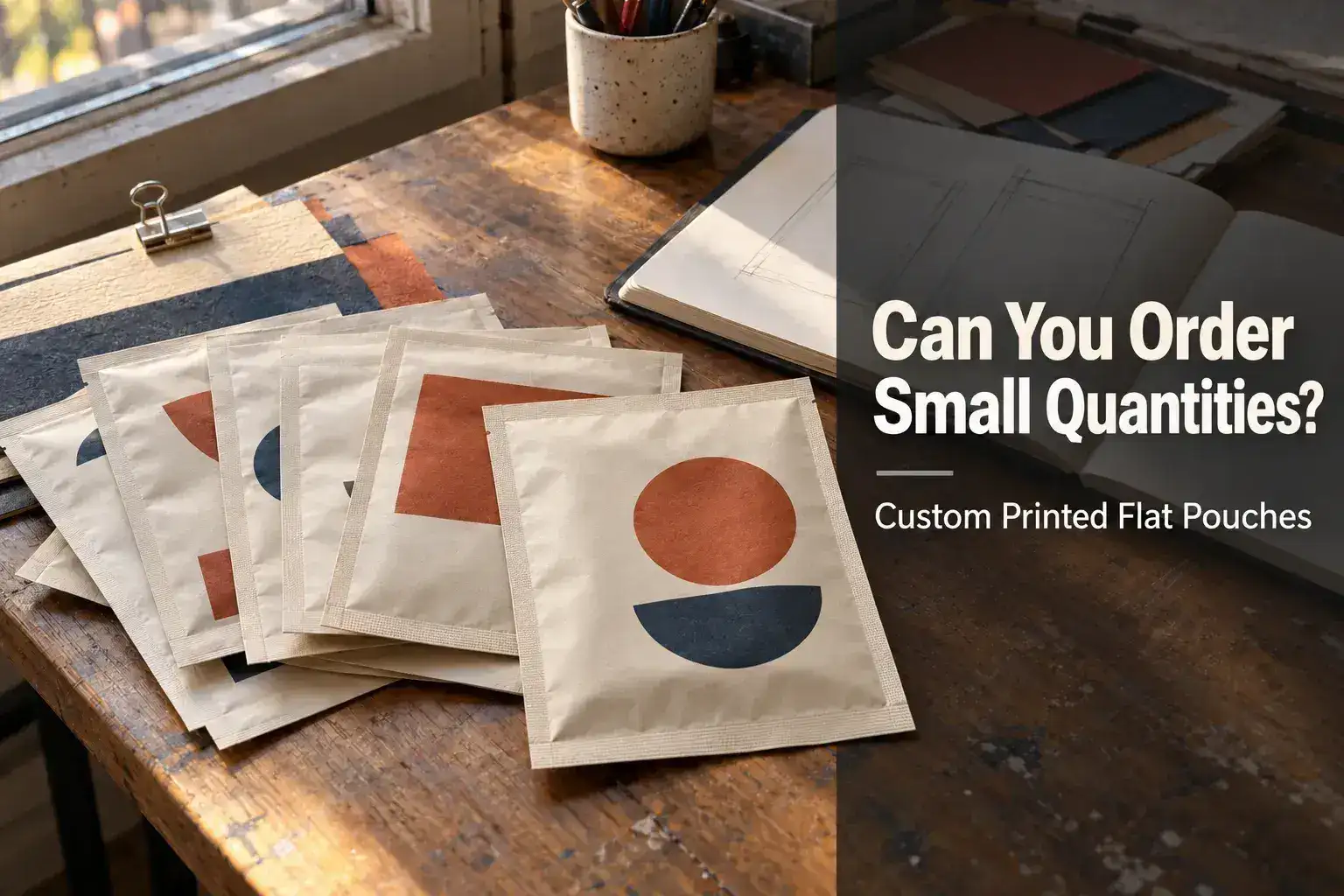
These product pages show compact flat-pouch examples. Ask for a dimensioned drawing before using one as a reference for your fill.
How do size, closure and material decisions interact?
Set the fill and sealing areas before positioning accessories or artwork. Our features and accessories guide helps identify features needing space on the drawing. The existing pouch features article explains tear notches, windows and closures. Apply those questions to the flat pouch drawing; the constructions differ.
The stand up pouch material article and material options page cover material selection. Use a flat pouch drawing for dimensions. If your product needs greater depth or upright display, review the stand up pouch format and compare the flat bottom protein powder bag.
For powders, explain scoop access, fill behaviour and seal-area cleanliness using the supplement packaging page. For snacks, use the food packaging page to describe the intended portion and dispensing method.
What should the artwork drawing show?
Show external dimensions, individual seal margins, the final top-seal zone, zipper position and any display hole. Discuss digital printing or gravure printing only after the physical areas available for artwork are established. Check finish expectations using our matte and gloss comparison.
Where can you check construction and closure concepts?
Sealed Air’s product literature illustrates the three-side seal format and its open end before filling. Fresh-Lock’s application guide explains why a closure should be selected around the application. Ask the supplier to mark the selected closure and each seal margin on your drawing.