Pet food packaging has to do three jobs at the same time: protect the food, maintain its freshness, and give the brand a clear presence on the shelf. The material structure, bag format, and visual design all affect the final result.
Key Takeaways
- 1. The right barrier structure helps protect pet food from oxygen, moisture, light, and outside odors.
- 2. Bag type should match the product weight, storage needs, and sales channel.
- 3. Once protection requirements are met, finishes, windows, colors, and bag shapes can help the product stand out.
1.Why Is Pet Food Packaging So Important?
Pet food needs protection from oxygen, moisture, light, and odors during storage and transportation. Exposure to these elements can affect freshness, texture, and aroma, especially for products containing fats or oils.
For pet owners, food quality is part of the daily feeding experience. The right Pet Food Packaging helps keep the product in good condition from filling to feeding while also protecting the brand’s reputation.
2.What Are the Key Functions of Pet Food Packaging?
Pet food packaging is designed to protect the product and make storage easier. Depending on the product, it may need to provide barriers against oxygen, moisture, light, and odors, while remaining strong enough for transportation and handling.
Features such as resealable zippers can also make opened products easier to store. The Packaging Materials and bag structure should be selected based on the food type, package size, and shelf-life requirements.
3.What Type of Bag Is Best for Dog Food — Stand-Up Pouch, Flat Bottom Bag, or Quad Seal Bag?
There is no single bag type that works best for every pet food product. The choice usually depends on product weight, filling volume, shelf presentation, storage, and where the product is sold.
1.Stand-Up Pouch
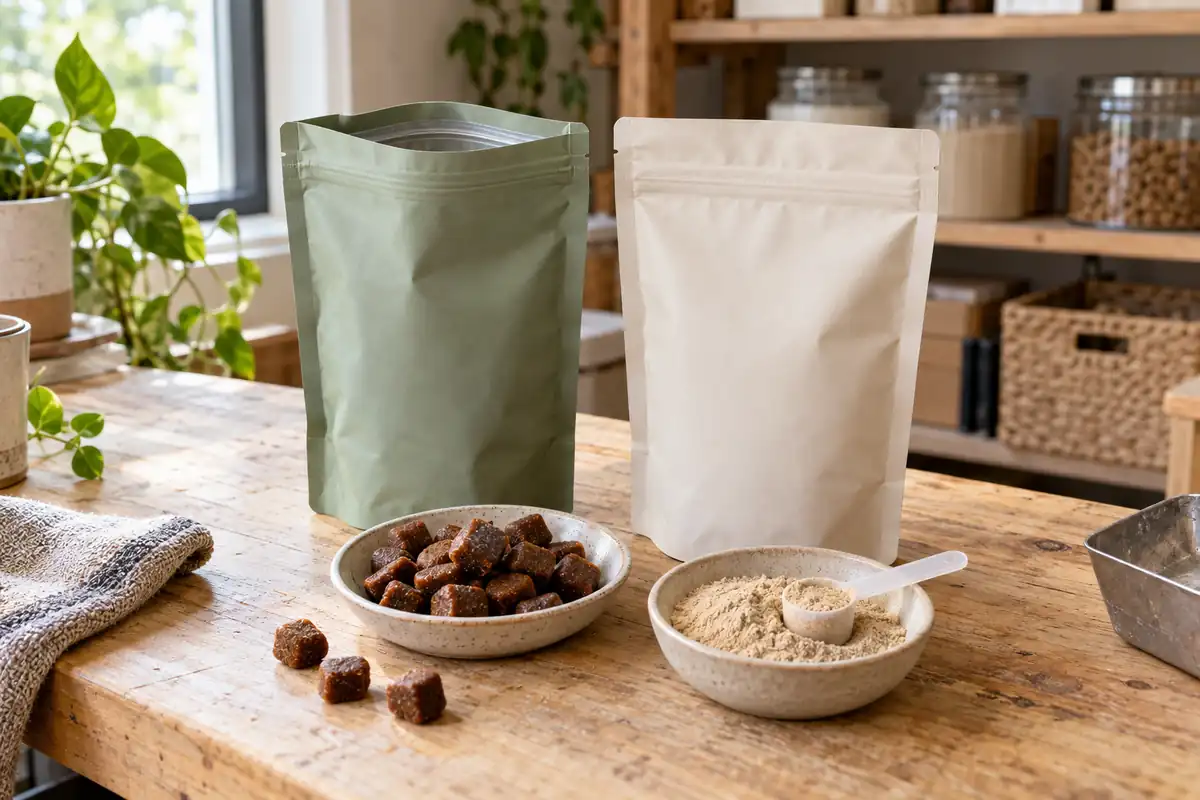
Stand-up pouches are commonly used for pet treats, freeze-dried food, samples, and smaller pack sizes. They are lightweight, easy to display, and provide a large printable area for branding.
They can also include features such as resealable zippers, tear notches, and product windows.
2.Flat Bottom Bag
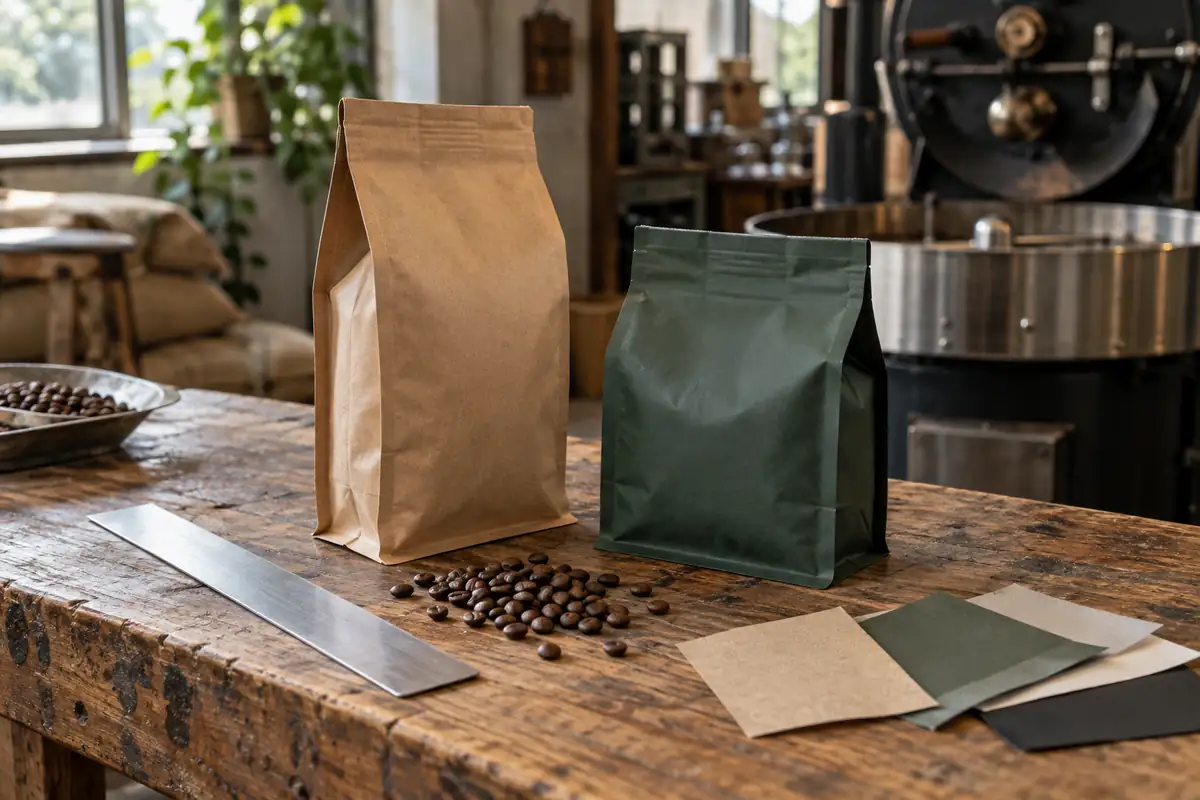
Flat bottom bags are a good fit for brands that need more capacity and a stronger shelf presence. The stable base and multiple panels provide extra space for product information, branding, and design.
They are often used for premium pet food and medium-to-large pack sizes.
3.Quad Seal Bag
Quad seal bags have a more structured shape and are suitable for larger or heavier products. Their side gussets provide additional capacity, while the bag maintains a clean, upright appearance on the shelf.
They can be a practical option for larger packs of dry dog food.
Other formats, including Side Gusset Bags and Custom Shaped Pouches, may be suitable for products with different capacity or branding requirements.
4.How Can Brands Make Pet Food Packaging Stand Out on the Shelf?
Pet food packaging competes with many similar products for attention. Once the material provides the required level of protection, design choices become more important.
1. Use a Window to Show the Product
A clear or partial window allows shoppers to see the product before buying it. This can work particularly well for treats, freeze-dried food, and products with a distinctive shape or texture.
2. Choose Finishes That Match the Brand
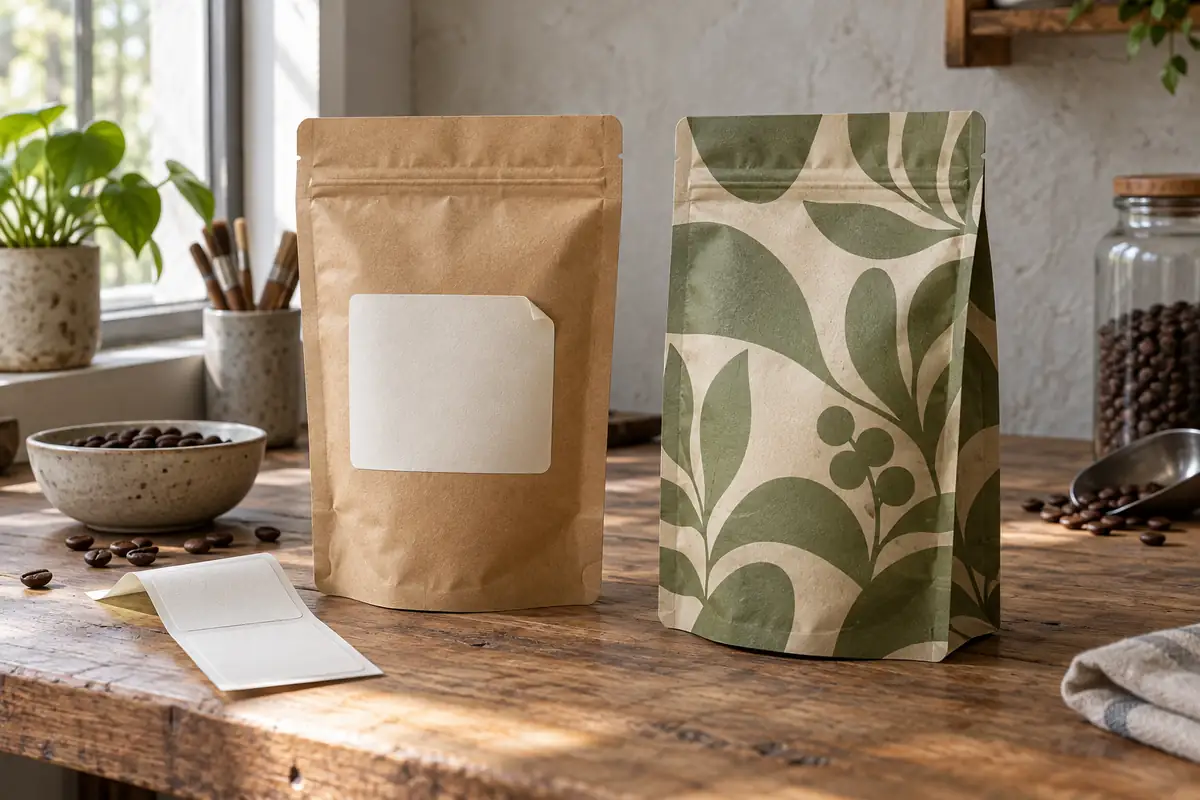
Matte, gloss, soft-touch, metallic effects, and selective finishing can change the look and feel of a package.
A natural pet food brand may prefer a matte surface and simple graphics, while a premium product may use metallic details or soft-touch finishes. The finish should support the brand rather than become decoration for its own sake.
3. Make the Bag Easy to Recognize
Bag structure can also affect shelf visibility. A different shape, die-cut detail, or distinctive window can make a product easier to identify among similar packages.
This is where Custom Die-Cut Pouches can give a brand more flexibility than standard bag formats.
4. Keep the Front of the Pack Clear
Pet owners should be able to understand the product quickly. Information such as the pet type, product category, protein source, and main benefit should be easy to find.
For example:
- High Protein
- Grain Free
- Freeze-Dried
- Sensitive Stomach
- Puppy Formula
FAQs
1.What is the best material for pet food packaging?
The material depends on the product and its shelf-life requirements. Products that need stronger protection may use multi-layer structures designed to reduce exposure to oxygen, moisture, and light.
2.Which bag is best for dry dog food?
For smaller pack sizes, a stand-up pouch may be suitable. Larger or premium products often use flat bottom bags or quad seal bags because they provide more capacity and a stable shelf presentation.
3.Can pet food packaging be resealable?
Yes. Resealable zippers and other closure options can make opened products easier to store and help keep the remaining food protected between uses.
4.Can I customize pet food packaging?
Yes. Custom pet food packaging can be developed based on the bag type, size, material structure, printing, finishes, and functional features required for the product.